C.T.M. (KEES) VAN DONGEN 1877 Delfshaven (The Netherlands) - 1968 Monte Carlo (Monaco) L' Acrobate
Oil / board: 78,4 x 51,3 cm
- This artwork can be viewed in our gallery
- Call us for more information: +31 26 361 1876
- World wide shipping available
Details
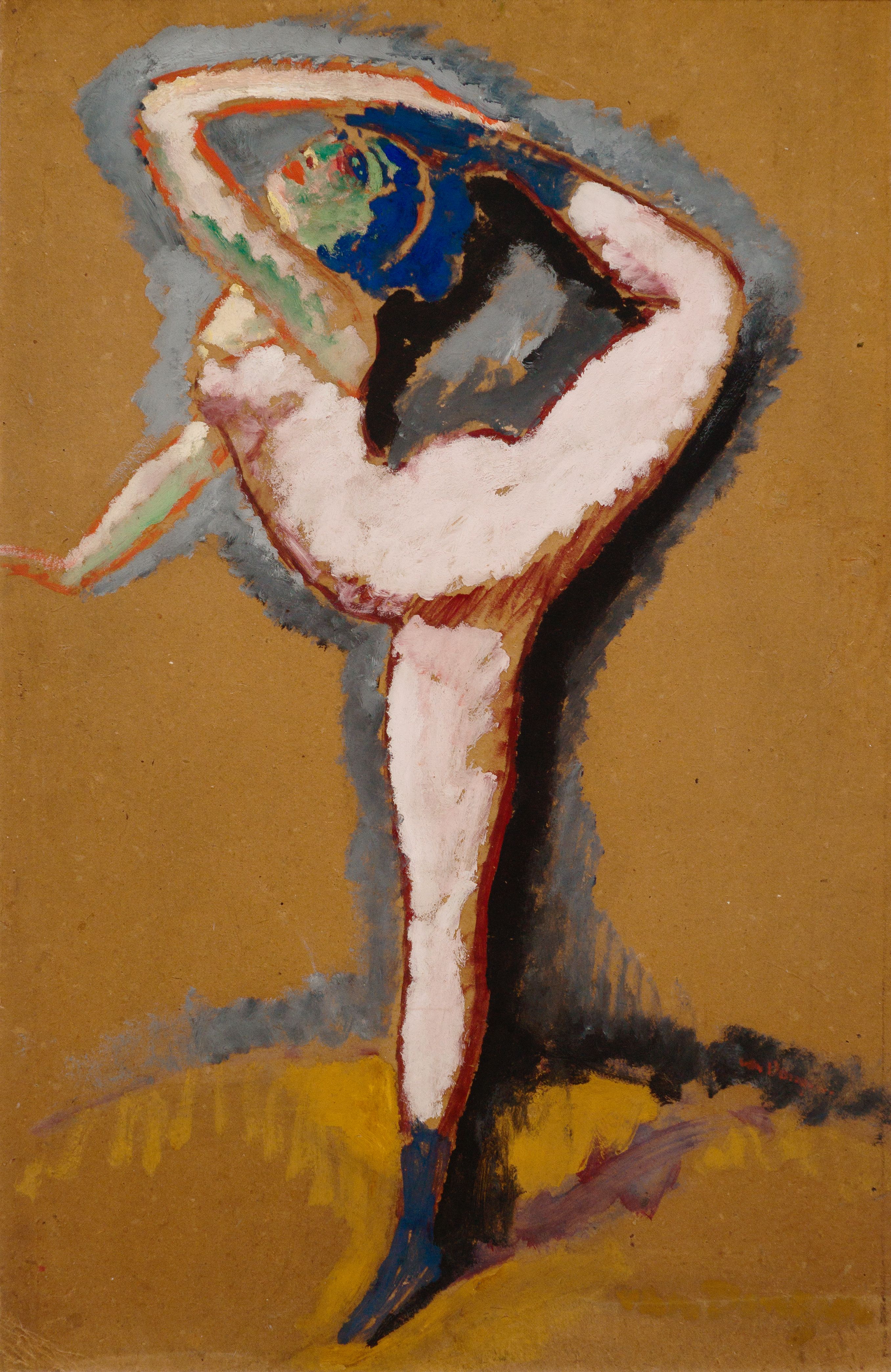
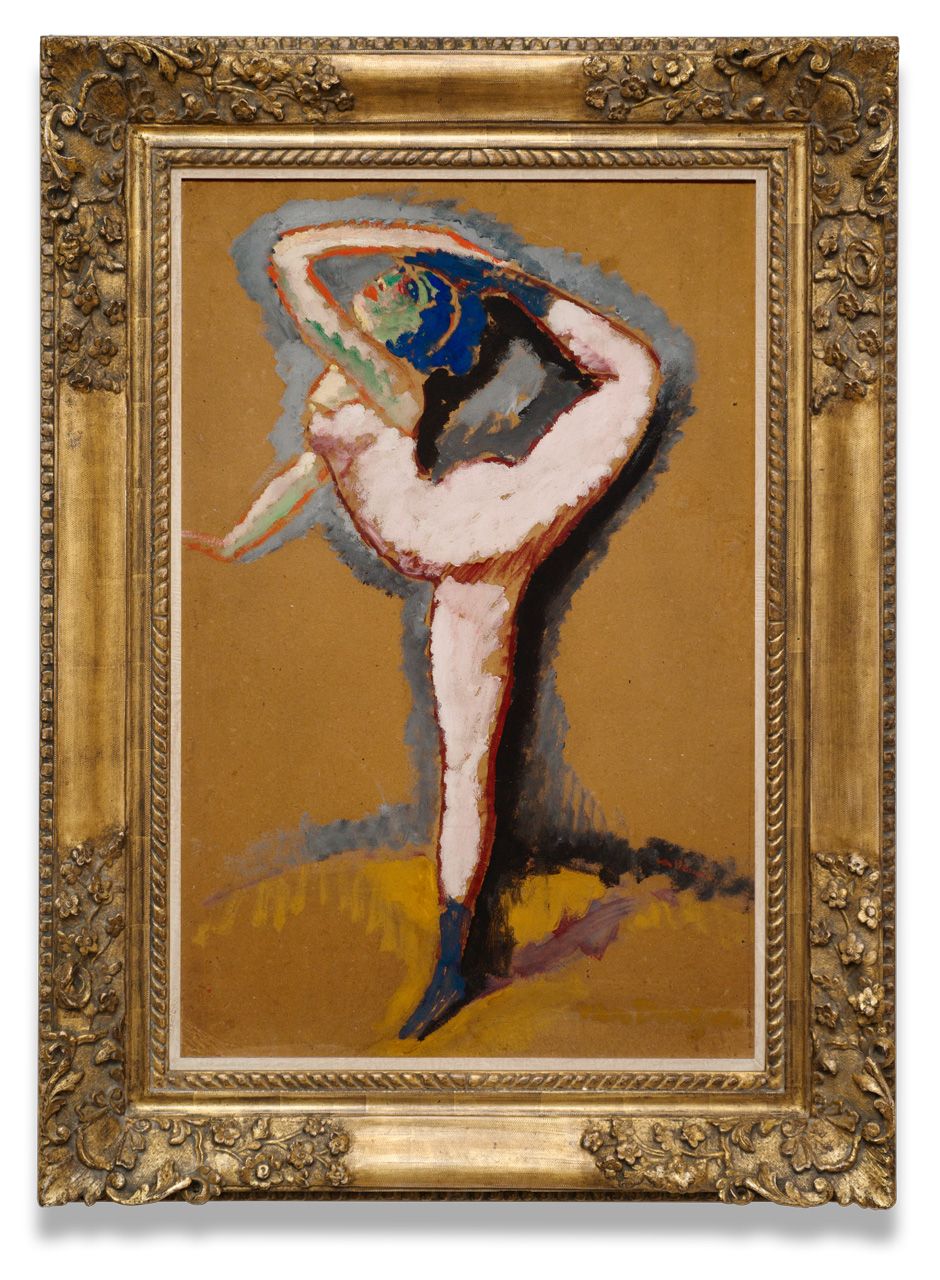
An acrobat steps into the footlights, her pale pink costume lit by a harsh spotlight. She holds her foot behind her head with one hand, her body forming a circle. The contrast with the shadowed areas is heightened by rendering them in vivid green, while her hair is painted a brilliant blue. The figure is painted directly onto cardboard, which further reinforces the sense of spontaneity. This remarkable painting is a textbook example of Fauvism: a short-lived movement with an enormous influence on the modern art of the century that followed. Fauvism was spontaneous and energetic, raw, full of colour, devoid of depth, and entirely new. The Fauves broke radically with Impressionism, liberating form and colour from any obligation to reality. The Dutch painter Kees van Dongen was one of its most important exponents.
In 1905, Van Dongen exhibited his work at the Salon d'Automne, where the latest art was shown each year, alongside Henri Matisse, André Derain and Maurice de Vlaminck. A critic compared the painters to wild beasts (fauves), and the movement took its name from that remark. The scandal was considerable, and the painters became famous overnight. Van Dongen distinguished himself from the other Fauves by refusing to paint landscapes, concentrating instead on the people who populated Parisian theatres, cabarets and circuses. Women were his subject above all: he became, par excellence, the painter of the Parisian demi-monde. He painted them with their large, dark-rimmed eyes and vivid red lips, instantly recognisable as the work of the greatest Dutch-French painter of the twentieth century. Kees van Dongen began his career in Rotterdam, where he studied for several years at the academy. He painted in the manner of the Hague School, but chose his subjects from the raw life of the city and its red-light district. Like many artists, he travelled regularly to Paris, but Van Dongen decided to settle there permanently. After a difficult start, he went on to become the most celebrated society painter in France.
When Van Dongen painted this work, he was living in Le Bateau-Lavoir in Montmartre, a dilapidated building that, before the First World War, served as a home and meeting place for countless painters, writers and poets. Van Dongen moved in in 1905, most likely at the invitation of Pablo Picasso. Together, they visited the Cirque Medrano regularly, which was situated close by. Because artists were permitted to work there during rehearsals and received free admission to performances, the circus held enormous appeal for them. Since its construction in 1875, it has been a gathering place for the Parisian bohème. Auguste Renoir, Edgar Degas, Georges Seurat and Henri de Toulouse-Lautrec all made celebrated paintings there, and at the turn of the twentieth century, a new generation of artists was to be found on its premises: Pablo Picasso, Georges Braque and Kees van Dongen were among its regulars. One innovation must have particularly captivated artists: the circus was lit by electric lamps and equipped with spotlights that followed the performers. In this painting, Van Dongen has captured the effect of just such a light.
Width: 51,3 cm
Private collection (acquired in 1967)
Collection Ellen Melas Kyriazi, Switserland
Sale Habsburg, Feldman, New York, May 8, 1989, lot 31, with Gallery Sakai, Japan
Private collection, Asia (acquired from the above ca. 2000)
Sale New York (Sotheby's), 6 November 2015, lot 356 ill.
Sale New York (Sotheby's), 6 November 2015, lot 356 ill.
Van Fentener van Vlissingen Foundation, The Netherlands, 2015 - 2019
Kunstgalerij Albricht, Oosterbeek, The Netherlands, 2019
Paris, Musée National d'Art Moderne / Rotterdam, Museum Boijmans Van Beuningen, Van Dongen, 1967-10-13 - 1968-01-28, no. 32, dated c. 1905-07
Lausanne galerie Vallotton, Van Dongen, September 1971 no. 9
Paris Musée Jacquemart-André, Le Bateau Lavoir, 1975 no. 13
Saint-Tropez, Musée de l'Annonciade / Toulouse, Réfectoire des Jacobins, Kees van Dongen 1877-1968, 1985-07-06 - 1985-11, no. 12
J. Bellow, S. Biass-Fabiani, F. Blanchetière a.o., "Rodin and Dance", Musée Rodin and The Courtauld Gallery, 2017-2018, p.30, no. 15 (ill.)
Laren, Singer Museum, "Painters of light. (Schilders van het licht)", September 2020 - January 2021
Jean Melas Kyriazi, Van Dongen et le fauvisme, La Bibliothèque des arts, Paris, 1971 no. 35, p. 87 - dated 1906
Exhibition catalogue Monaco, Monaco National Musée Nouveau, Kees van Dongen, 2008-06-25 - 2009-04-19 (+ venues Montreal & Barcelona), fig. 34, p. 175 - dated 1909-1910
Rotterdam, Museum Boijmans Van Beuningen, Kees van Dongen, 1989-12-17 - 1990-06-17, p. 40 BVG 8782 (L’Acrobate 1905-1907)
J.R. De Lorm, A. van Lienden, e.a., Singer Museum, "Painters of light. (Schilders van het licht)", Laren 2020, p. 50
J. Bellow, S. Biass-Fabiani, F. Blanchetière e.a., "Rodin and Dance", Musée Rodin and The Courtauld Gallery, 2017-2018, p. 30, nr. 15 (ill.)
Anita Hopmans, "Kees van Dongen. The Road to Succes", Laren/Zwolle 2023, p. 137, nr. 84
Wildenstein Institute (No. 99.06.03.6413.691)
Over C.T.M. (KEES) VAN DONGEN
Cornelis Theodorus Marie van Dongen was a Dutch-French painter. He was part of the movement referred to as Fauvism. Other painters who belonged to this movement included Matisse, De Vlaminck, Bracque and Dufy. Characteristic of these artists is the use of bright unmixed colors. Born a Dutchman, Van Dongen spent much of his life in France and also obtained French citizenship.
Kees van Dongen was born in Delfshaven to a family of four children. His father owned a malthouse. The company was located next to the house where Kees grew up. At the front and back of the house was water. Through the window one had a view of the boats moored in the water. Kees had great talent for drawing. However, there was no money for a proper art education. From the age of fourteen, Kees had to work.
Between 1896 and 1898, he took evening classes at the Academy of Visual Arts and Technical Sciences (now the Willem de Kooning Academy). This was located on the edge of Rotterdam's red light district where many sailors came.
The sailors, prostitutes and dancers were the subject of many of Van Dongen's works. It was a lively neighborhood with coffee houses, brothels, candy stalls, in short an exciting environment for an aspiring artist.
In 1897, twenty years old, Van Dongen left for Paris. There he could barely support himself. He stayed in the studio of the painter Siebe ten Cate in Montmartre. After returning briefly to Rotterdam from 1898, where he devoted himself to illustrations for the Rotterdams Nieuwsblad, Van Dongen settled permanently in Paris from 1900. There he initially occupied himself with drawing and illustrating magazines. His fluent drawing style effortlessly transitioned into a style of painting that brought him into the milieu of the French Fauvists. This movement first showed its work at the 1905 Salon d'automne, where work by Kees van Dongen was also on display.
Fauvism was a new phenomenon for that time. It was a much more expressive way of painting than had been practiced until then. Especially the use of pure unmixed colors is characteristic of the fauvists. Van Dongen found himself in Paris among the French and developed his own identity. His work is not so much French-oriented, like that of his Parisian colleagues, as it is internationally oriented. He visits Spain, Morocco, Tunisia, Egypt and the Netherlands. His work therefore differs from the more nationalistic cubist art of the French. Van Dongen's work is clearly influenced by the different cultures he has become acquainted with.
Once settled in Paris, Van Dongen moves into a large studio in Montparnasse, where he not only receives his art friends but also organizes dance parties. By now he has become a celebrated artist. The cultural life ended during the First World War. After this war ends, life in Paris picks up full speed and Van Dongen manages to draw attention to his work.
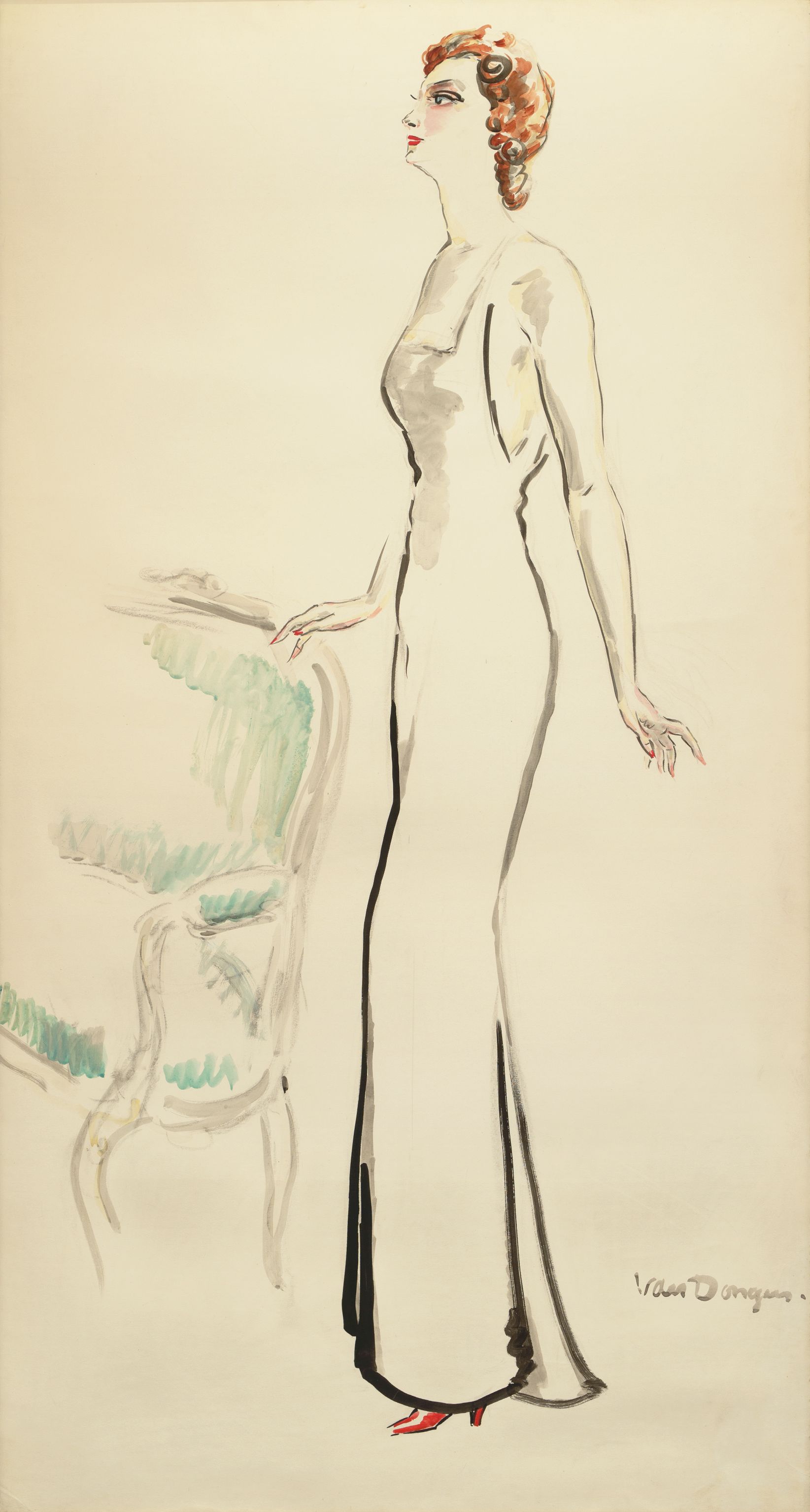
He creates large portraits of people from the world of film and theater with which he achieves great success. Van Dongen moves into an even larger studio. The parties and celebrations he gives there play an important role in the way he presents himself as an artist. He is at the height of his fame and is enjoying this life. He has commissions to choose from. In 1929 he becomes a naturalized Frenchman. In the 1920s, he painted mostly portraits in the fashionable circles of Paris. By now Van Dongen had become more French than Dutch.
During World War II, Van Dongen tried to continue painting as much as possible. He did not care too much about the circumstances. Even after the war, he remained active as a painter, while also continuing to create graphic work. He lithographed and illustrated many books. Van Dongen remained active as an artist until an advanced age and participated in nightlife.
Today his work, in addition to private collections, can be found at Museum Boymans-van Beuningen in Rotterdam, Haags Gemeentemuseum, Stedelijk Museum in Amsterdam and Stedelijk van Abbe Museum in Eindhoven.
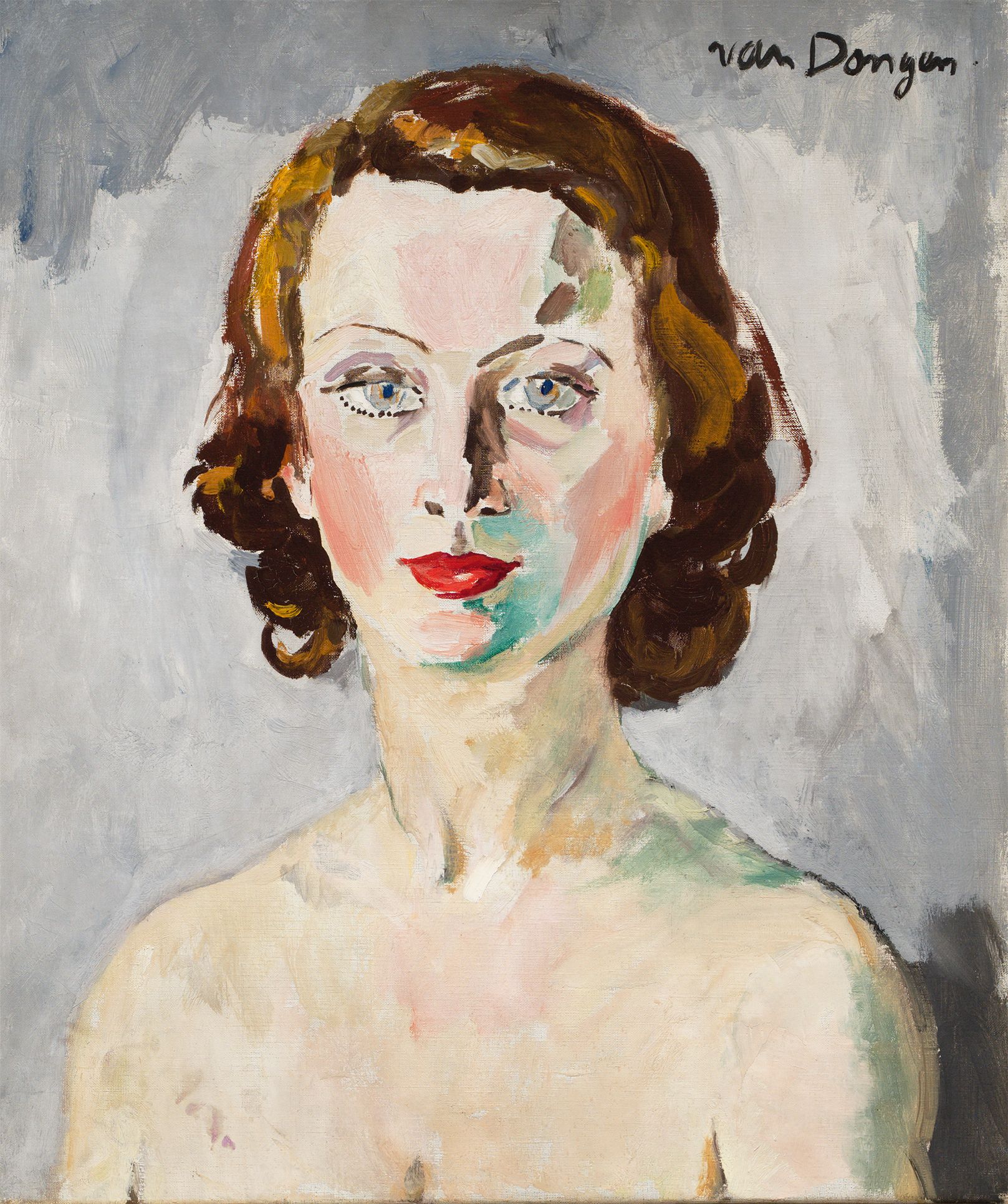
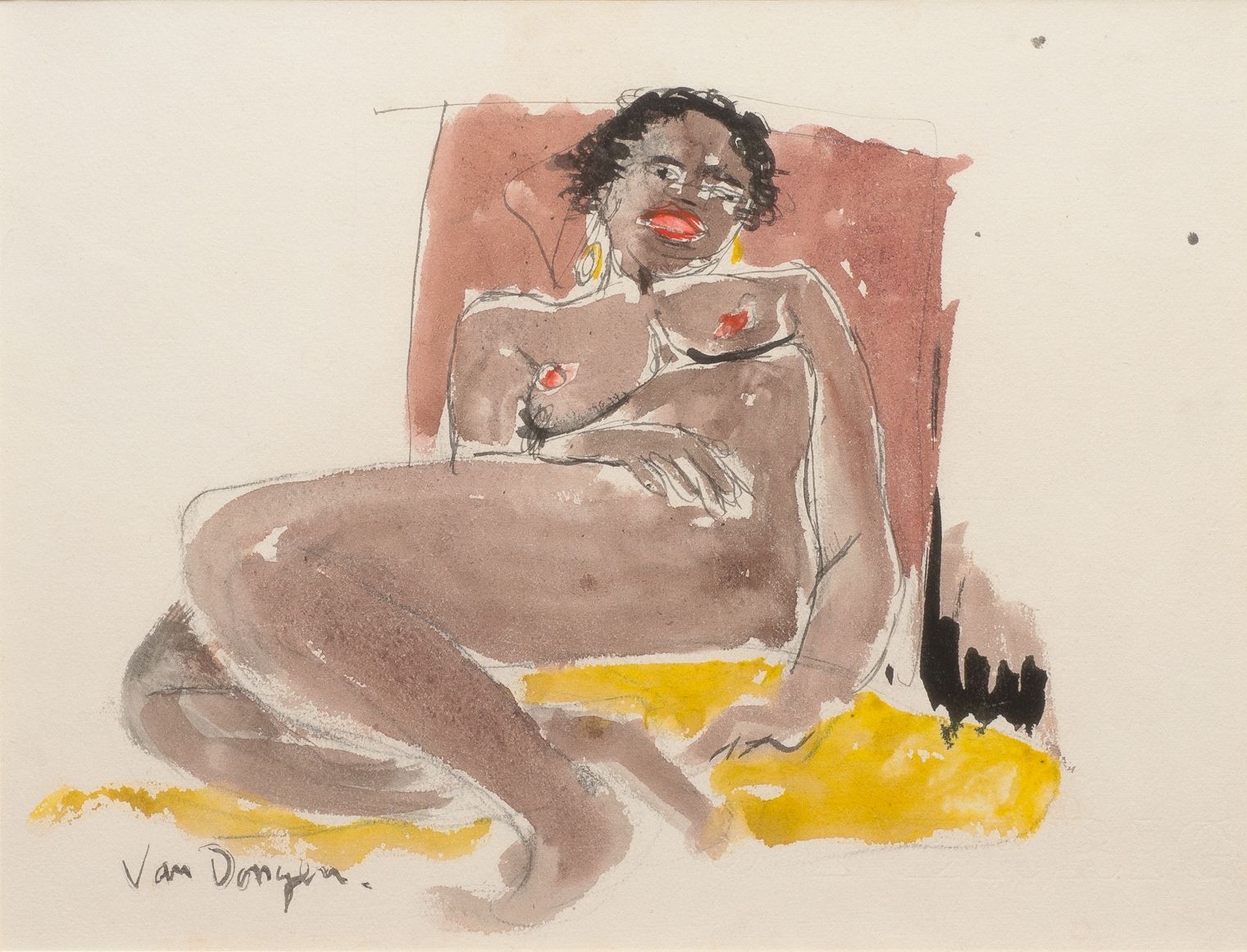
If there is one subject that is part of Van Dongen's work it is "women. He called women "the most beautiful landscape. His drawings of girls from Rotterdam's red light district caused a scandal. Works of naked women were removed from an exhibition at Boymans-van Beuningen in 1949 because of the uproar over them. He painted Picasso's girlfriend and made lithographic posters of Brigitte Bardot. He often portrayed women in bright colors and with big eyes. His nudes also became very famous.