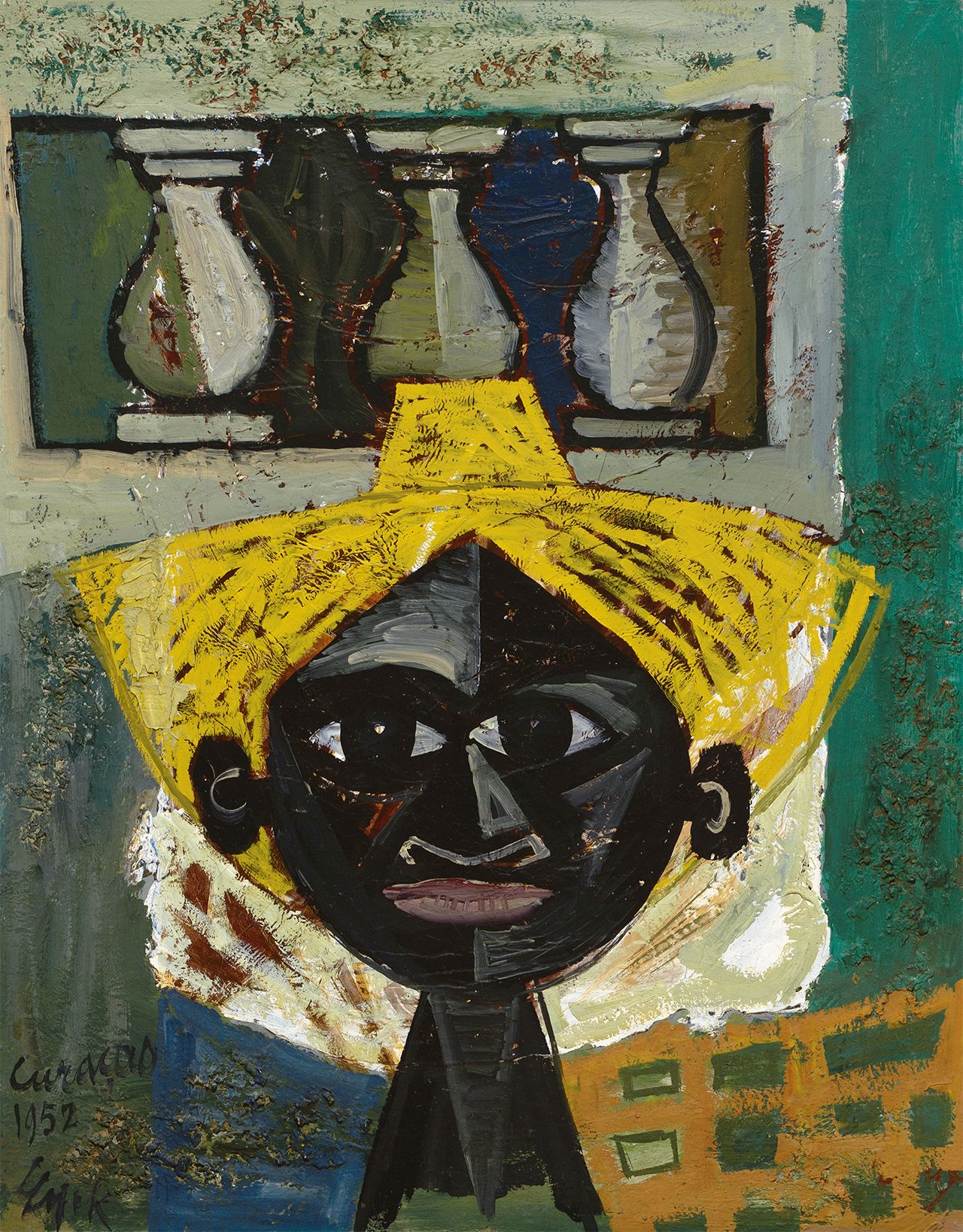
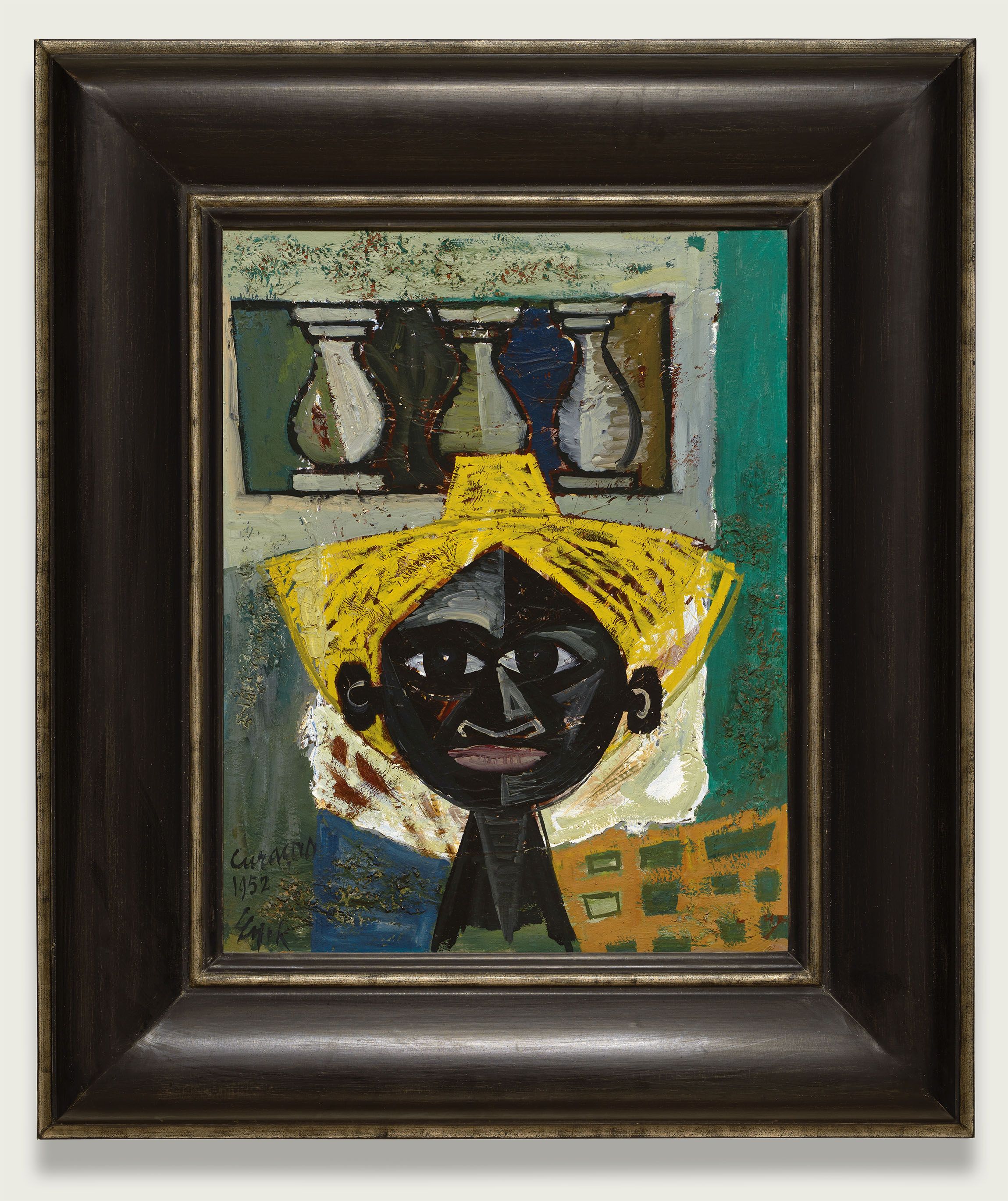
C.H. (CHARLES) EYCK 1897 Meersen - 1983 Schimmert Portrait of a Woman
Oil / Panel: 64,5 x 51 cm
- This artwork can be viewed in our gallery
- Call us for more information: +31 26 361 1876
- World wide shipping available
Width: 51 cm
Over C.H. (CHARLES) EYCK
Charles Eyck was born in 1897 in Meerssen, the fifth child in a family of fourteen. His parents were of humble origins. Charles quickly developed an interest in culture, reading, and drawing. At the age of ten, an illness left him deaf, forcing him to abandon his formal schooling. His passion for drawing, combined with the family's need for him to contribute to the household income, led the fourteen-year-old Charles to the Maastricht ceramics factory Ceramique, where he decorated cups and saucers. In the evenings, he attended drawing classes with Jos Tilmans, a teacher and pottery painter.
At twenty-one, Charles enrolled at the Rijksacademie voor Beeldende Kunsten in Amsterdam, where he came under the strong influence of A. Derkinderen is known for his monumental wall and stained-glass paintings. In the early 1920s, he made study trips to Southern Europe, where he met his wife, Karin Meyer. By 1929, he had begun to enjoy modest success in Paris and received his first commission for a church painting in Rumpen, after which the family returned to the Netherlands. His reputation grew throughout the 1930s, and in 1938 Charles settled in Ravensbos, a house of his own design situated between Valkenburg and Schimmert.
During the Second World War, he refused to join the Kultuurkammer and was forced to exchange drawings for necessities. He also sheltered colleagues from the Randstad at Ravensbos.
After the war, he worked primarily as a stained-glass artist in the many war-damaged churches and designed numerous resistance monuments. In the 1950s, he mounted a firm resistance to new artistic movements and made journeys for inspiration to Spain, France, Greece, and the Dutch Antilles. In 1955, he was appointed professor at the Jan van Eyck Academie, but following a disagreement with the director, partly over accommodation, he resigned after a year.
Until he died in 1983, he remained active as a painter and draughtsman, though he had turned away from the contemporary art world and lived a withdrawn life at Ravensbos. He never ceased writing letters to all those with whom he wished to exchange ideas. Given his deafness, the written word was a vital means of communication, one he used constantly and with great frequency.