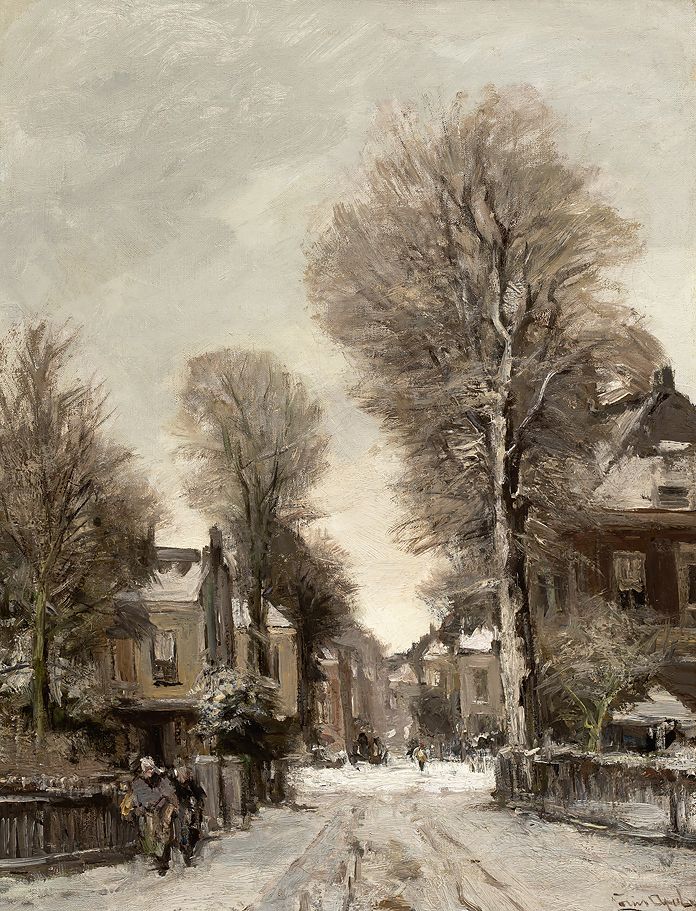
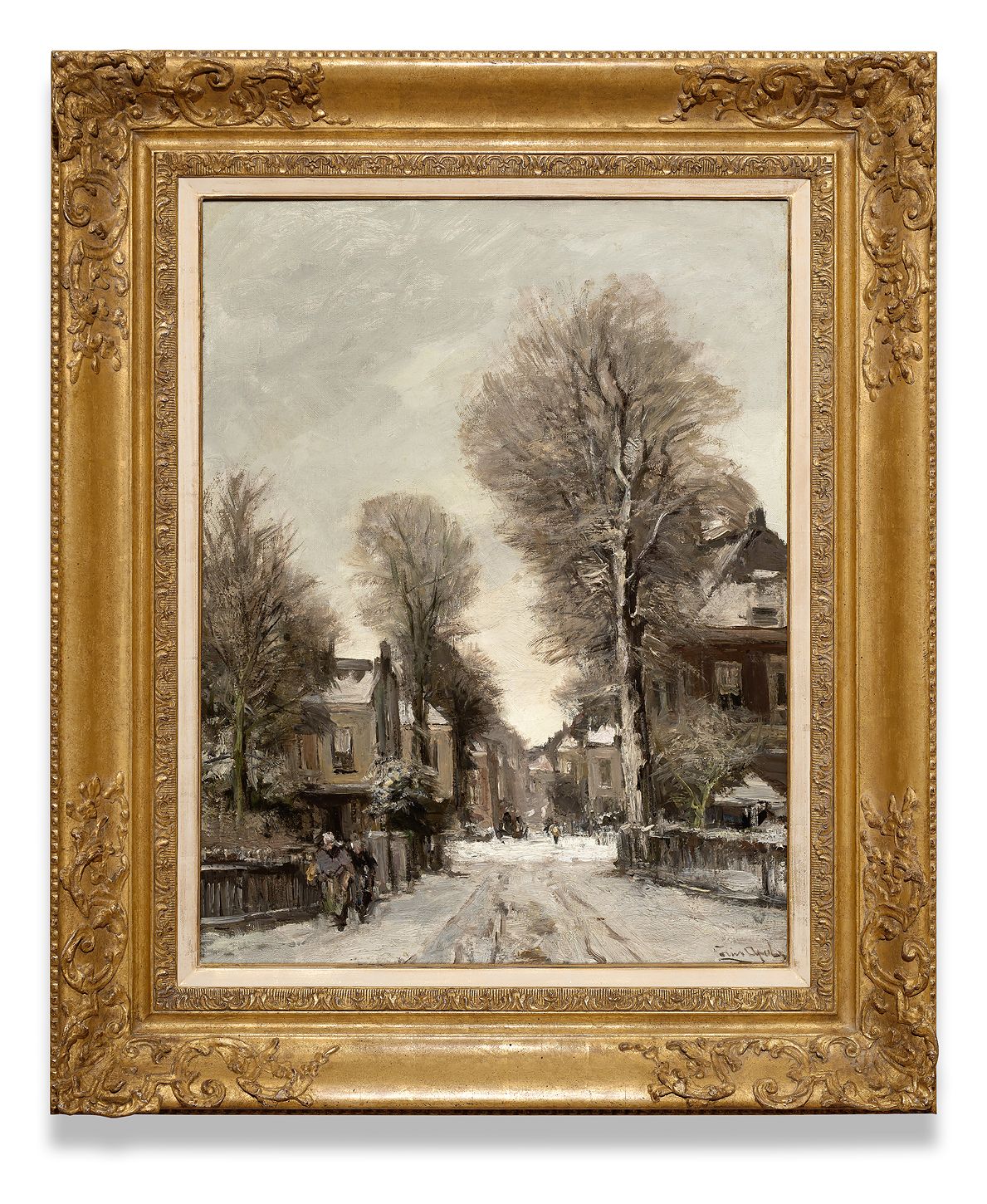
L.F.H. (LOUIS) APOL 1850 The Hague - 1936 The Hague A Dutch Town in Winter
Oil / Canvas: 60 x 46 cm
- This artwork can be viewed in our gallery
- Call us for more information: +31 26 361 1876
- World wide shipping available
Details
A fragment of a city, in the grip of winter. A rare townscape by the Hague School's specialist in snow. We look down a street lined with large detached houses and impressive trees. In the distance, a pedestrian and a carriage are visible. It is the trees, however, that dominate the painting. The pair in the foreground, bent double as they trudge through the snow, make plain how bitter the cold is. Winter scenes had already been a beloved genre within Dutch painting in the seventeenth century. In the first half of the nineteenth century, when painters readily drew on the art of the Golden Age, scenes of snow and ice once again became popular. Apol's teacher, the Romantic landscape painter J. F. Hoppenbrouwers, was known for his wintry landscapes with windmills, skaters, and sledges. Apol chose the same subject matter, but his winter landscapes are quite different. There is no winter merriment in his work. He emphasised the sensation of winter: the biting wind, the atmosphere of a cold winter's day. What interested him was the stillness of wintry nature; people play hardly any role in his work. He rendered that experience of snow and cold on canvas with a palette of an infinite number of shades of white and grey. Apol rarely dated his work, but his manner of painting grew progressively looser and more impressionistic. In the end, it was not the details that mattered, but the mood of the landscape.
Louis Apol began painting his atmospheric winter scenes at a young age and met with immediate success. He was the youngest painter ever to receive a royal subsidy and attracted attention at exhibitions. High prices were paid for his work, which was acquired by the royal household and the Rijksmuseum. Vincent van Gogh saw one of his paintings there and wrote: "Do you know that I often find things by Apol, for instance, white on white, very good indeed. (…) Truly, that thing is tremendously beautiful." The high point of Apol's career was his 1880 voyage to the island of Spitsbergen on a scientific expedition. On this journey, he made hundreds of drawings and watercolours of the polar region, enough to sustain his work for years to come. Until the end of his life, Apol continued to paint his much-sought polar landscapes, which were eagerly acquired at home and abroad. He even produced a panorama of Spitsbergen under the midnight sun, featuring mounted polar bears. Thousands of people came to see it.
Louis Apol belonged to the Hague School of painters, who ventured out to paint en plein air. They sought to put an end to the Romantic manner of looking at nature by approaching it as honestly as possible. What concerned them was the impression of light and atmosphere. The painter Gerard Bilders wrote: "I seek a tone that we call coloured grey — that is, all colours, however intense, brought together into a whole in such a way that they give the impression of a fragrant, warm grey." He and his colleagues most often sought that grey tone outside the city, where they painted the sky, the sea, or the expansive polder landscape. Apol found that tonality in the infinite gradations of white that snow-covered landscapes offered him. Fortunately, he lived in an age when winters still provided sufficient material for painting.
Width: 46 cm
Over L.F.H. (LOUIS) APOL
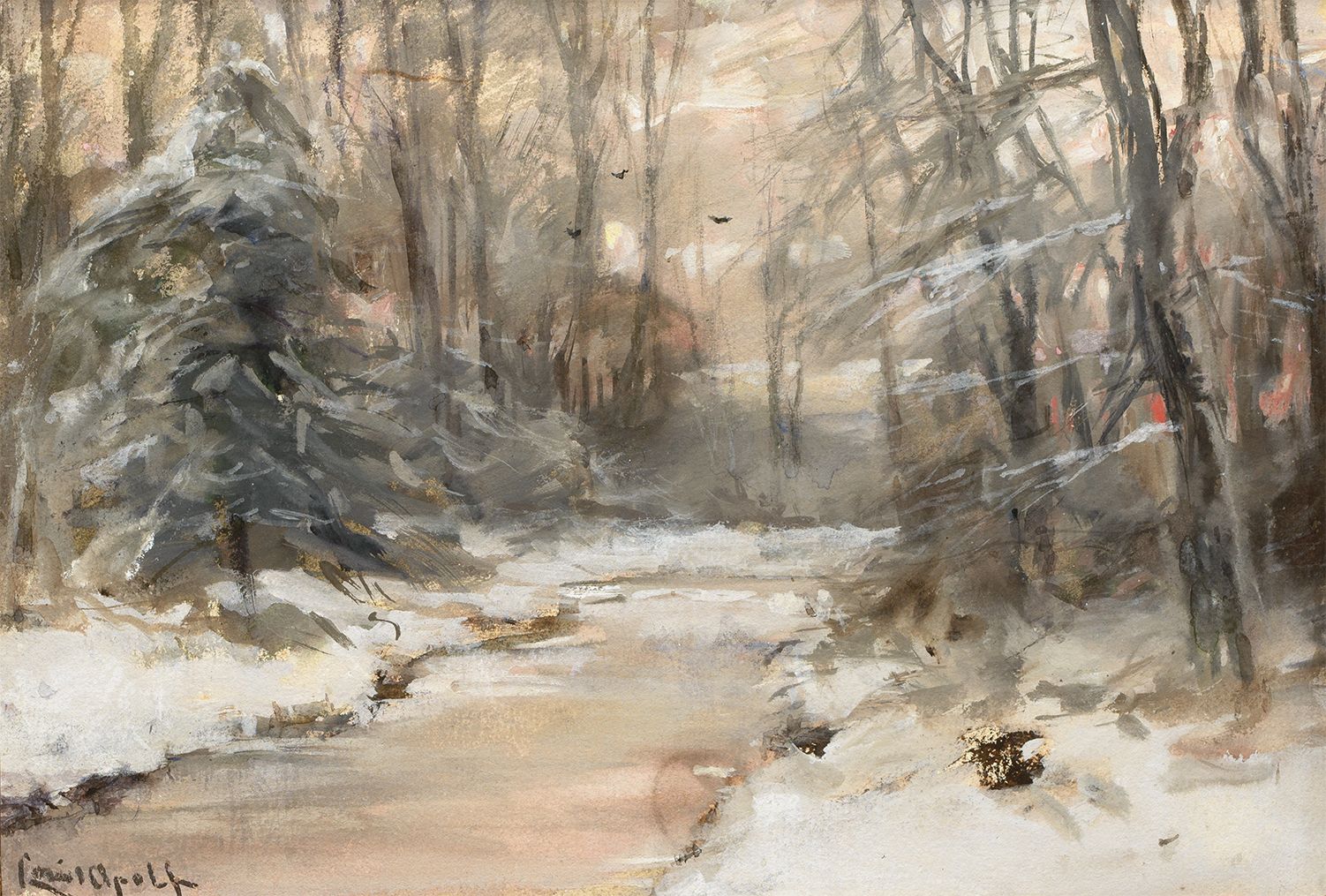
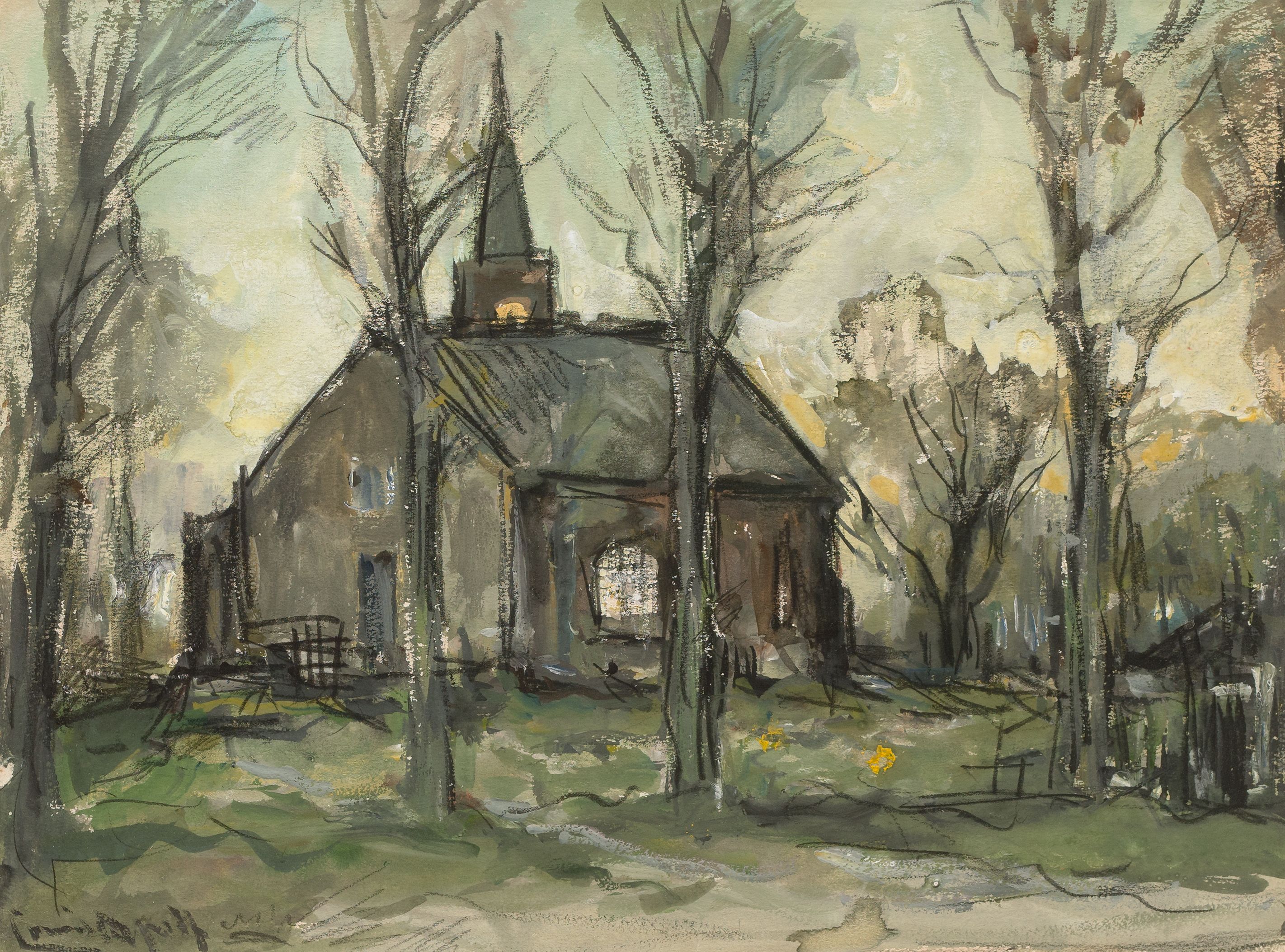
Louis Apol is one of the most important painters of the Hague School, best known for his winter landscapes and woodland scenes in the snow. The artist found his finest landscapes mainly in the surrounding countryside and parks of The Hague and around the (eastern Dutch) city of Arnhem. He joined the "Dutch Barbizon", an artist colony in the east of The Netherlands (Arnhem, Oosterbeek ) known for the “plein-air” painting and the un-Dutch hilly landscape. He met several well-known Dutch painters like Anton Mauve, one of the founders of the Hague School. Louis Apol was a pupil at the Royal Academy of Art (1867-1872) in The Hague. In 1871, he received the Royal Subsidy for Painting and in 1874 a silver medal at an exhibition in Amsterdam. As a young man he started his career with a good reputation, receiving from King William III of the Netherlands an important medal of merit and by selling a large painting to the Rijksmuseum in Amsterdam. In 1880 Apol travelled with a scientific expedition to Spitsbergen on the polar schooner Willem Barentsz to recreate a historical journey from the 16th century. During the trip, he sketched, drew and painted in watercolours the icy surroundings and the polar fauna they encountered, from a purpose build enclosed observation tower on deck. The impressions and sketches of this trip inspired him for his “Winters” for the rest of his artistic life. Many of the sketches are to be found in the collection of the Maritime Museums in Amsterdam and Rotterdam. His style is definitively impressionistic, developing from the more detailed academic to the loose and forceful brushstrokes he favoured in his later work. People play only a minor role on his canvases: no ice skaters or other joyful scenes. All attention is on nature, the wintery light and the all over atmosphere. His compositions invite the viewer to step into the scene, with paths and woodcutters’ trails opening up at the front. His many shades of white giving the landscape a realistic liveliness. His “greens” (i.e. non winter) paintings are rare. Apol's work is to be found in the Rijksmuseum in Amsterdam, the Teylers Museum in Haarlem and the Kunstmuseum in The Hague and in some major private collections.