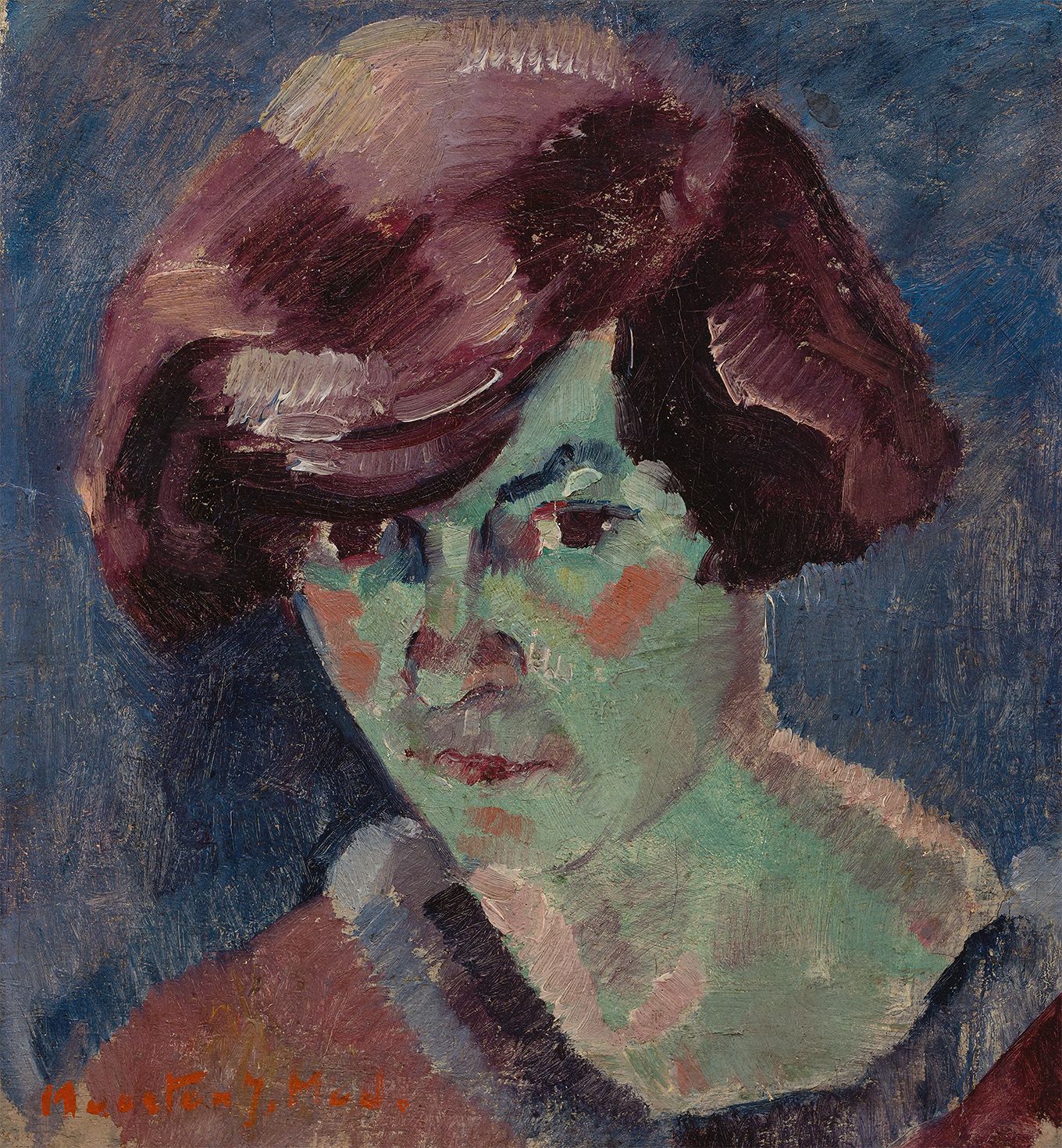
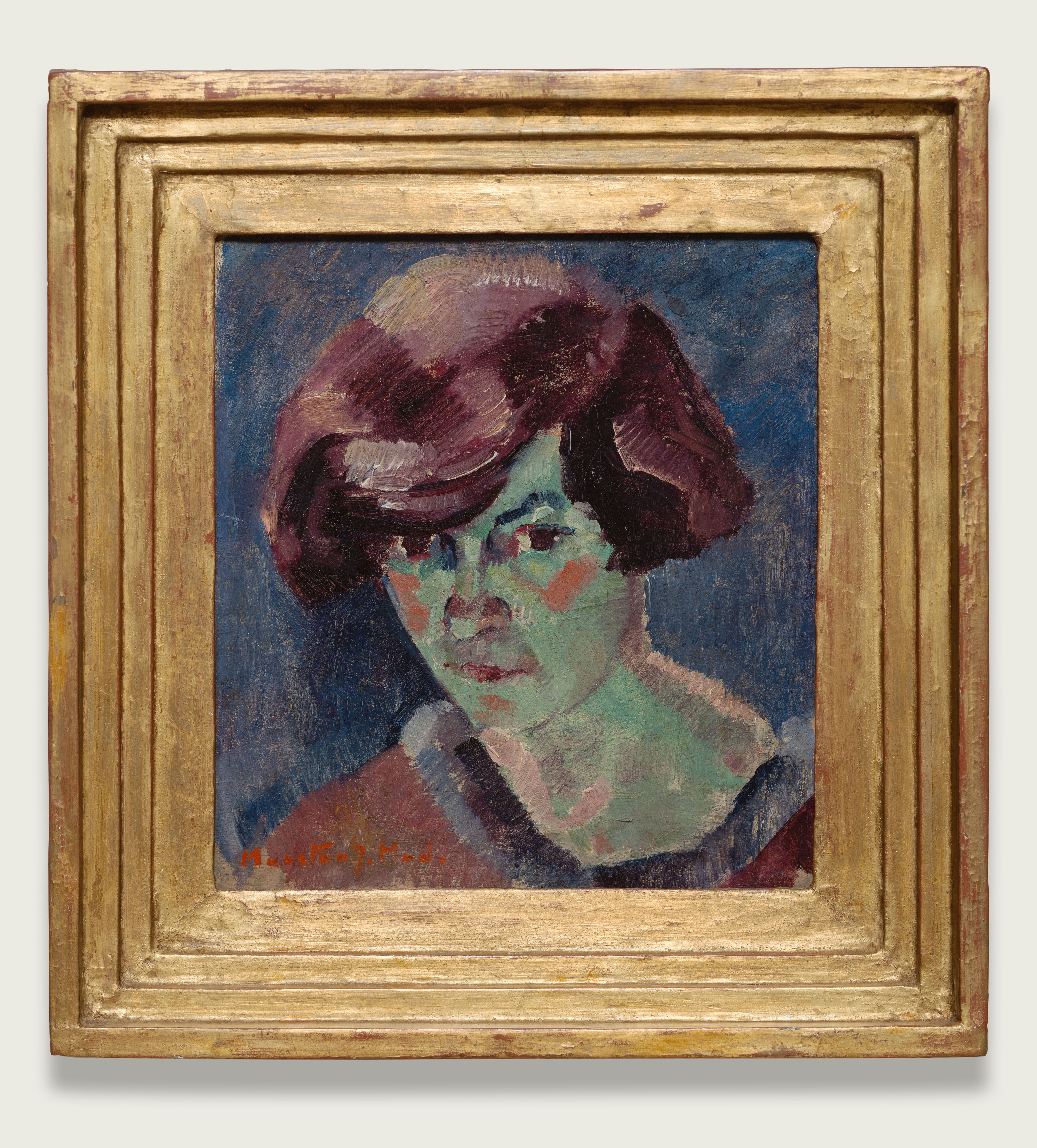
M. (MÉDARD) MAERTENS 1875 Koolskamp (Belgium) - 1946 Brussels (Belgium) Portrait of Marthe Guillain
Oil / Canvas: 31 x 29 cm
- This artwork can be viewed in our gallery
- Call us for more information: +31 26 361 1876
- World wide shipping available
Width: 29 cm
Over M. (MÉDARD) MAERTENS
The Belgian artist Médard Maertens is often associated with the Fauvist movement, a style that emerged around 1905 in France and characterised by bold, unconventional colour use. Maertens' Fauvist period—particularly between 1910 and 1920—represents some of his most expressive and striking work. In his Fauvist works, Maertens abandoned the Impressionist pursuit of naturalistic representation. Instead, he chose emotion, expression and powerful chromatic interplay. Vivid reds, deep blues and unnatural greens formed the basis of his palette. Colour no longer served reality, but rather the emotional value of the scene.
Characteristic of Maertens is his use of heavy, black contour lines that demarcate forms; a style related to the work of the Brabant Fauvists such as Rik Wouters and Edgar Tytgat. These lines give his figures, interiors and landscapes an almost graphic quality, with a certain monumentality. Maertens focused on everyday scenes: cityscapes, figures, women at work, or intimate interiors. His subjects remained recognisable, but were transformed through colour and line, lending them a dreamlike or even symbolic character. Although Maertens drew inspiration from prominent figures such as Matisse, he gave Fauvism a personal, sometimes sombre inflexion. Where French Fauvists embraced light and airiness, Maertens' work occasionally tended towards melancholy or introspection. In this sense, he formed a bridge between Fauvism and the emerging Expressionist movement. The Fauvist works of Médard Maertens are a powerful example of how colour and form can be deployed to visualise interior experience. They reveal an artist who dared to break from convention, whilst always following his own path.