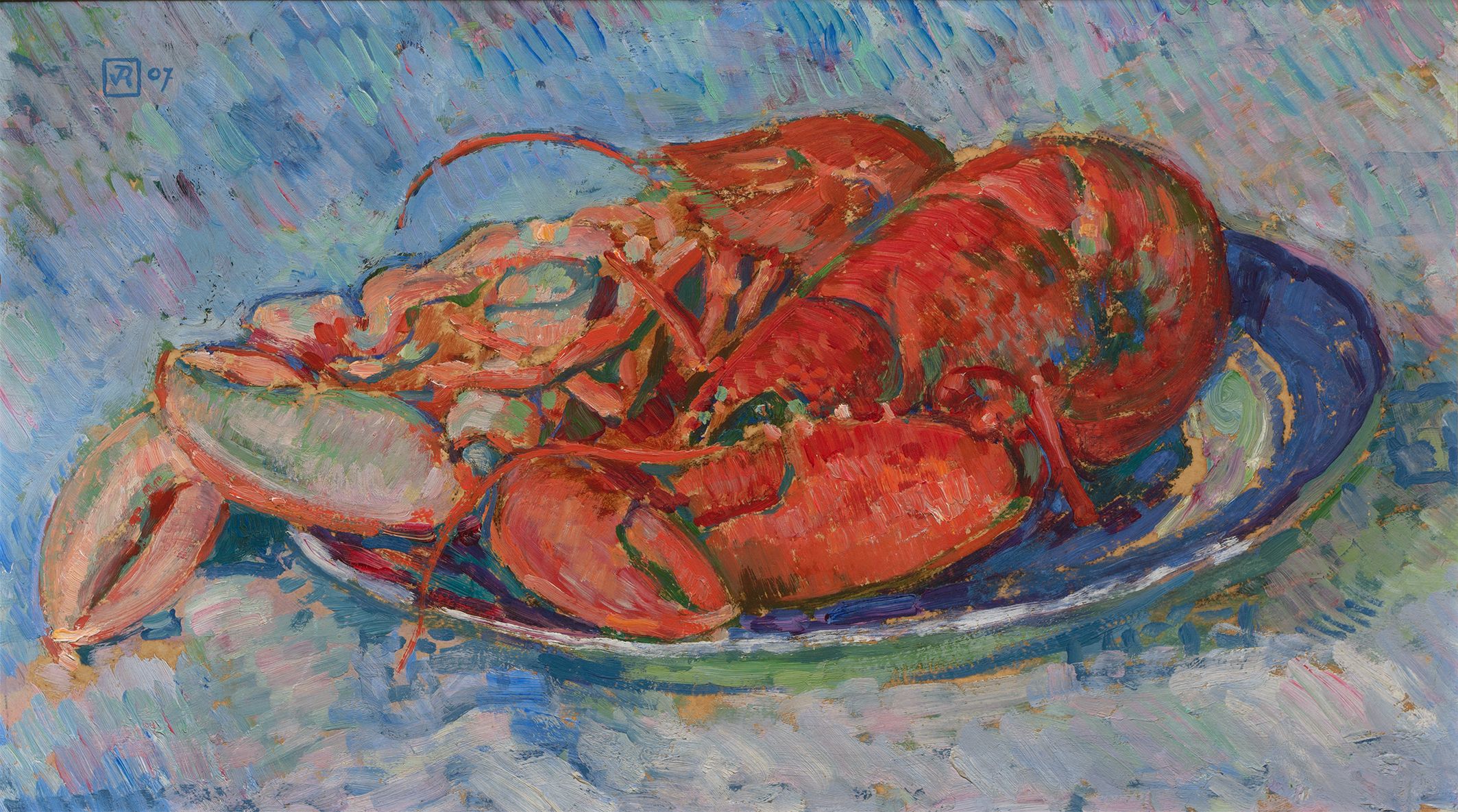
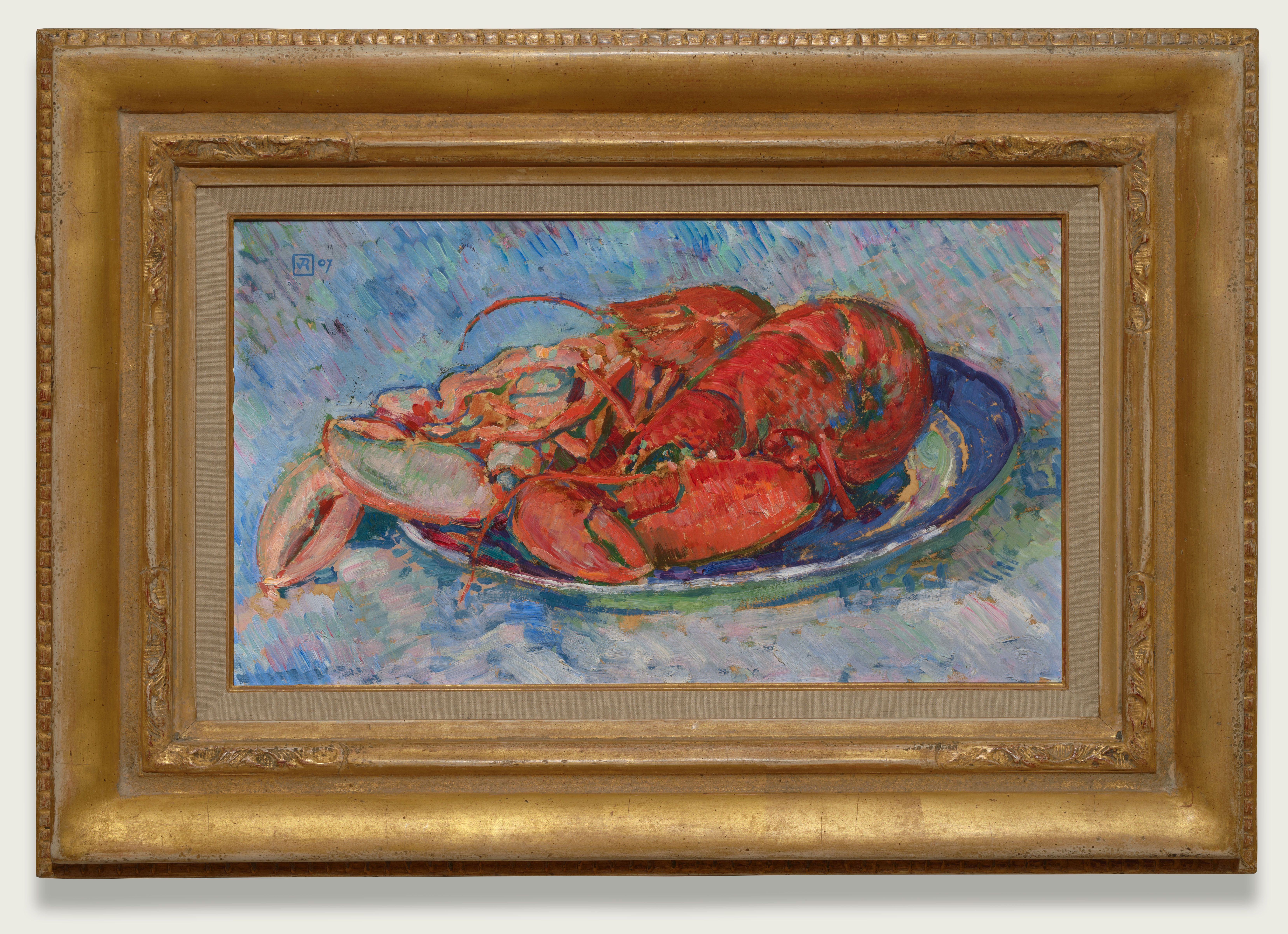
TH. (THÉO) VAN RYSSELBERGHE 1862 Ghent (Belgium) - 1926 Saint-Clair (France) Deux Hommards
Oil / Panel: 24 x 41 cm
- This artwork can be viewed in our gallery
- Call us for more information: +31 26 361 1876
- World wide shipping available
Width: 41 cm
Sale Sotheby's, London, 28 May 1986, no. 16
Collection Baels, Antwerp, 1986 - 2002
Sale Sotheby's, Amsterdam, 25 Nov. 2002, no. 56
Private collection The Netherlands
Ronald Feltkamp, "Théo van Rysselberghe. 1862-1926", Brussels, 2003, p.232, no. 1907-055 (ill.)
Over TH. (THÉO) VAN RYSSELBERGHE
Théo van Rysselberghe ranks among the foremost exponents of Belgian Neo-Impressionism. Trained at the academies of Ghent and Brussels, he co-founded the avant-garde circle Les XX in 1883. His encounter with the work of Georges Seurat in Paris in 1886 converted him to Pointillism, a technique he applied with exceptional refinement in portraits, landscapes, and marine views. He maintained close friendships with Paul Signac, Émile Verhaeren, and Henry van de Velde. After 1900, he gradually abandoned the strict divisionist manner in favour of a freer, broader touch. In 1911, he settled at Saint-Clair on the Côte d'Azur, where the Mediterranean light shaped his late work: sun-drenched landscapes, bathers, and portraits rendered in a warm, saturated palette.