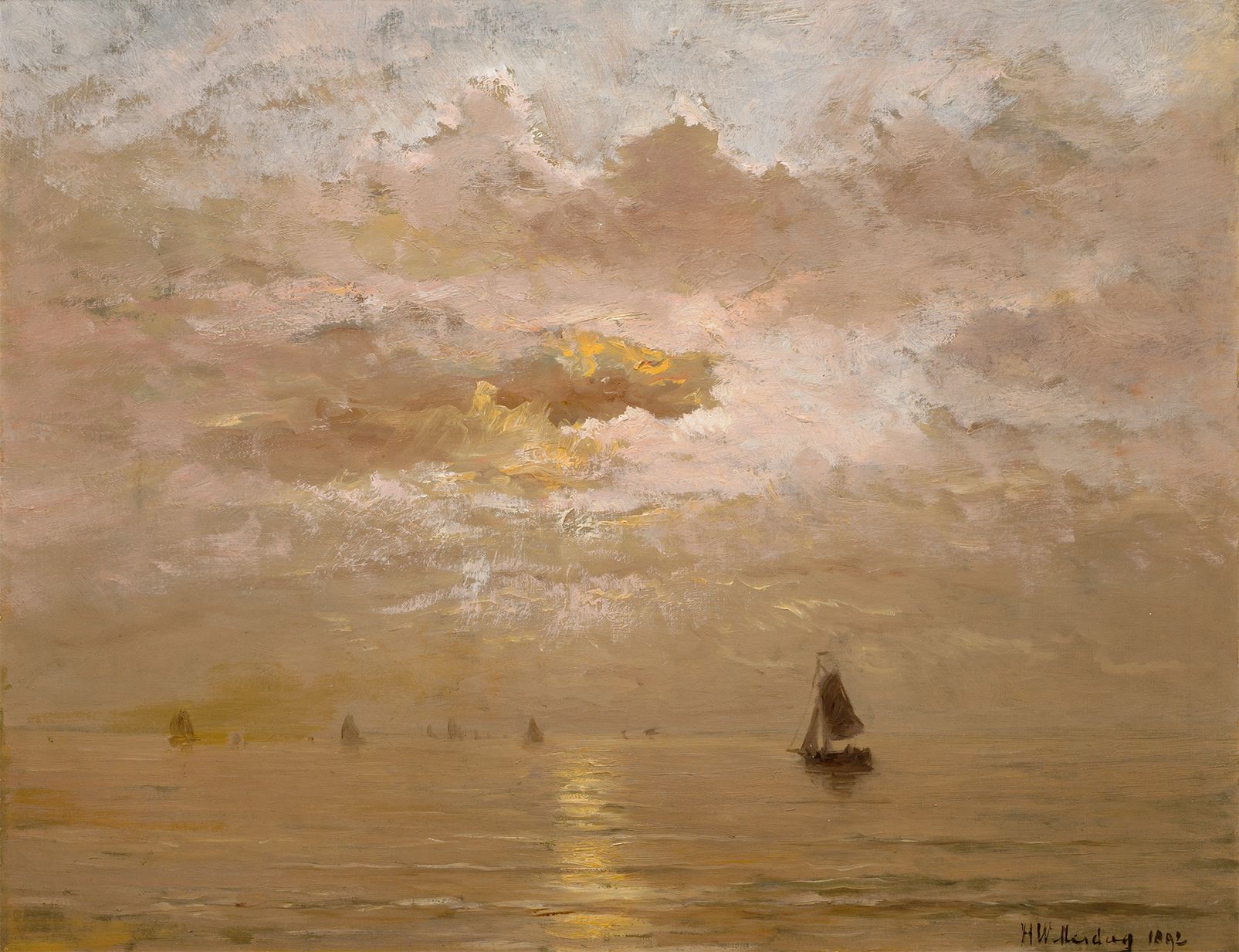
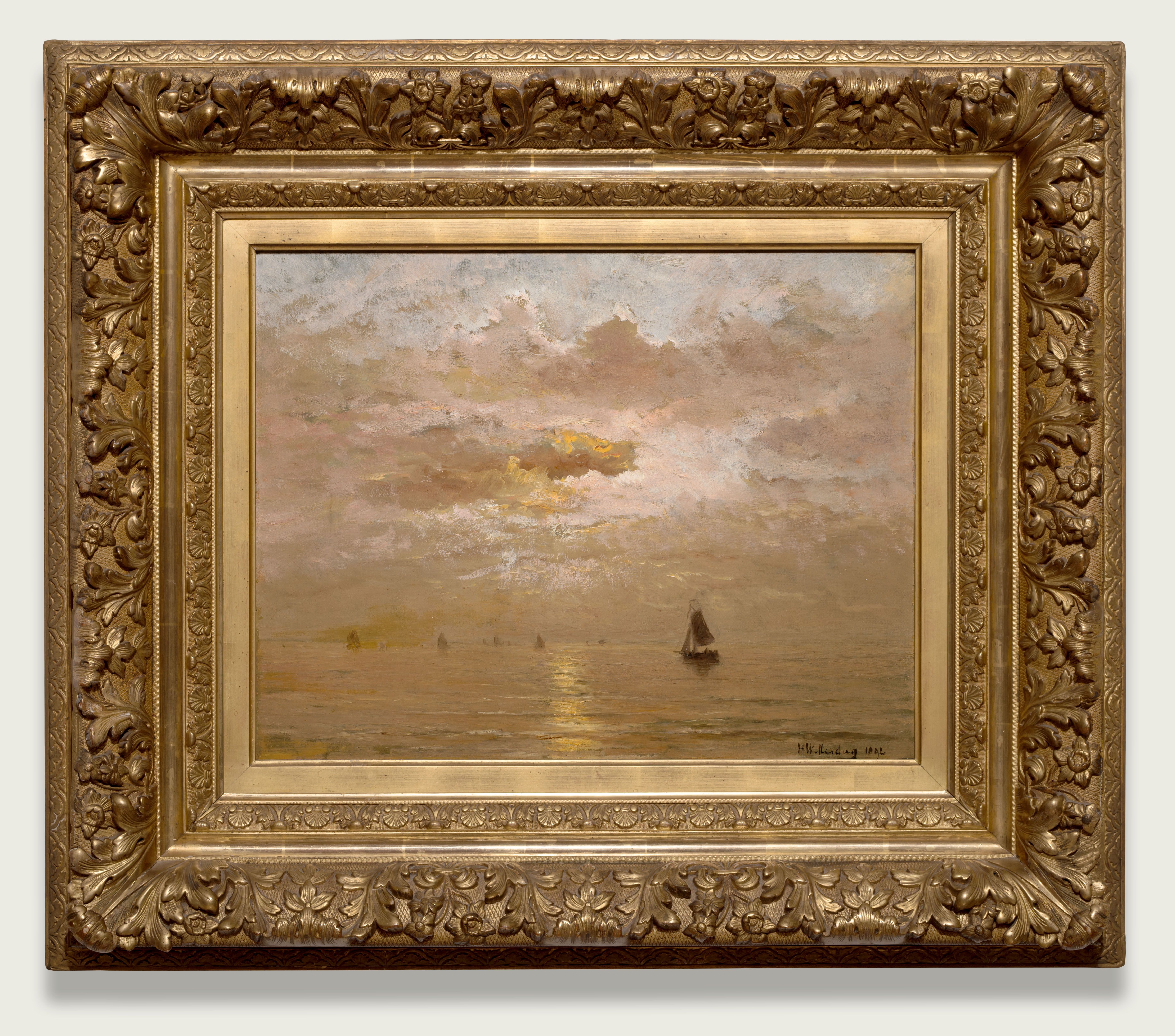
H.W. (HENDRIK WILLEM) MESDAG 1831 Groningen - 1915 The Hague Sunset at Calm Sea
Oil / Canvas: 41,5 x 50 cm
- This artwork can be viewed in our gallery
- Call us for more information: +31 26 361 1876
- World wide shipping available
Width: 50 cm
Over H.W. (HENDRIK WILLEM) MESDAG
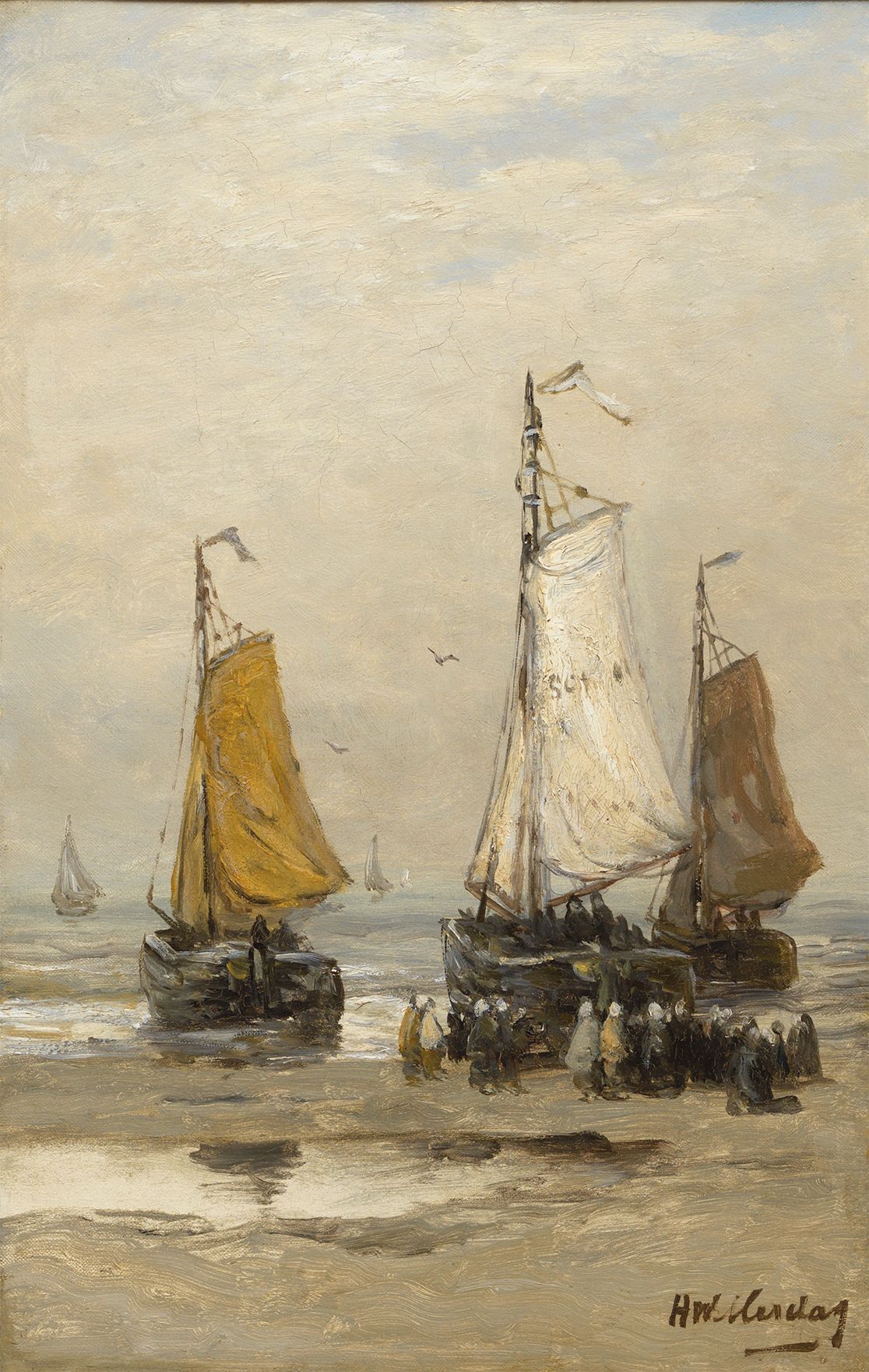
Mesdag is one of the most famous Dutch 19th century painters. His Impressionistic style follows the rules of the Hague School, of which he was one the founding fathers. He was born into a well-to-do family in Groningen, in the north of Holland. Destined to follow into his father’s footsteps as a banker his professional career as an artist started relatively late. It was only after his father died that he with his wife Sientje van Houten, also an artist, moved via Brussels to The Hague to become not only a prominent artist in the newly formed the Hague School but also a great collector of contemporary (19th century) art. As a professional painter he settle in a studio in Scheveningen, overlooking the North Sea. He had found his subject! In endless variation he would paint the ever changing sea and skies, the fishing vessels, the hard labour of pulling the ships every night on the beach. When finally a harbour was built in 1904 to keep the ships safe from storms, Mesdag was convinced that it was his task in life to keep the memory alive of "how it used to be" before. That’s why we seldom see a steam ship or the new harbour painted by him. Mesdag was a prominent figure in society, popular and respected. A prolific painter, his works are to be found in many museums and private collections around the world. A superbly Dutch rendering of sea and sky appealing universally. Mesdag's collection of his contemporaries together with some of his own form the basis of a museum in The Hague. The best known museum in The Hague is dedicated to the Panorama Mesdag, a unique 360 degrees representation of 19th century Scheveningen. It is one of the very few surviving painted panorama's in Europe to be seen in a purpose built round dome. It attracts many thousand visitors a year.
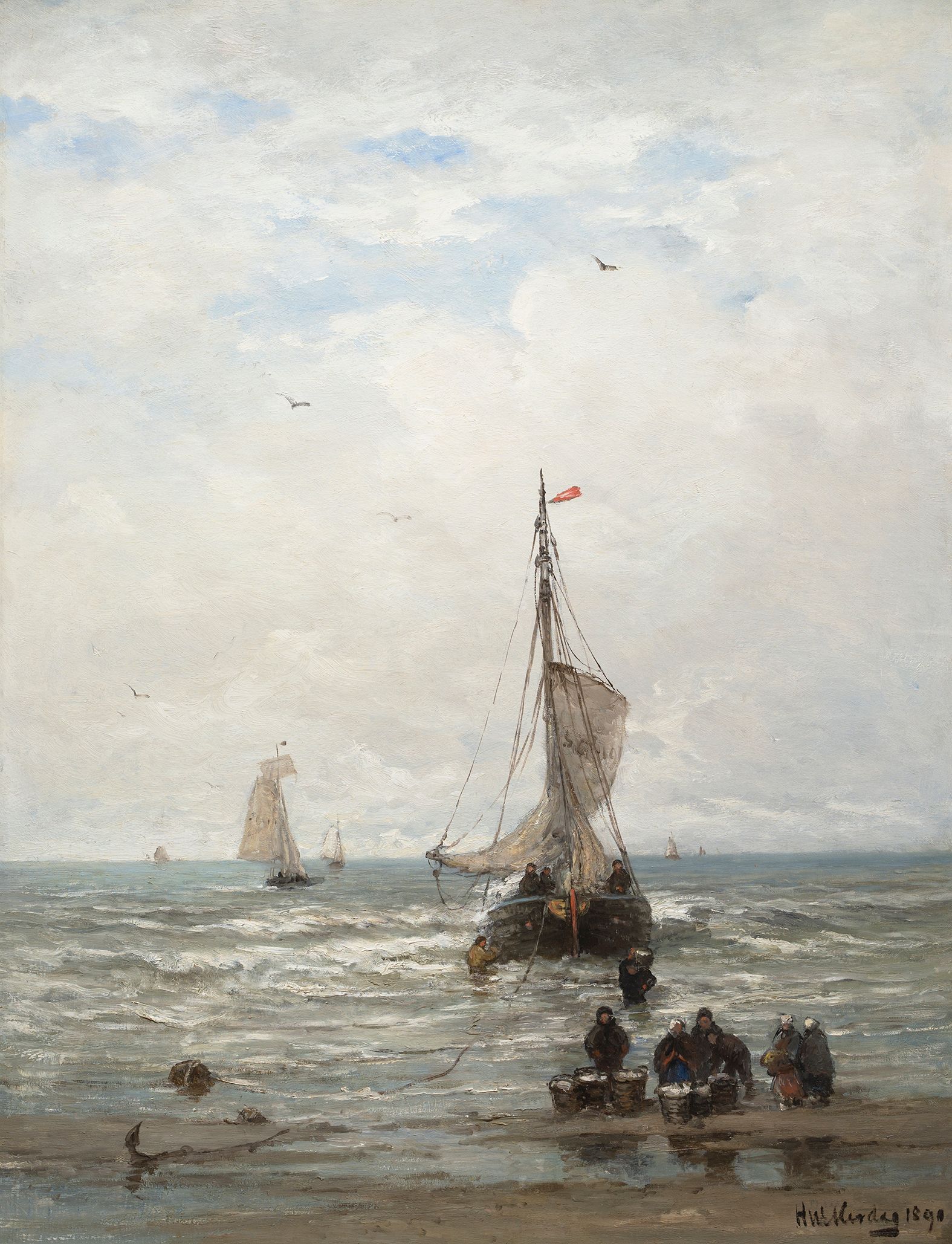
Mesdag's fascination for the sea started in 1868 when he and his wife Sientje Mesdag-van Houten made their annual visit to their native city Groningen, and visited the Island of Norderney where Mesdag made his first sea studies. His international career began with the gold medal he received at the Salon Paris in 1870 for the painting Les Brisants de la Mer du Nord. Stimulated by his success in Paris and his love for the sea, Mesdag focused on the North Sea and the fishermen there. He purchased a room at the 'Villa Elba' and later at Hotel Rauch located at the Scheveningen beach and considered himself a realistic seascape painter. From his room he could observe the sea in all weathers and captured his impressions of the Dutch North sea and all the activities on the Scheveningen beach under all circumstances. A period of great recognition began. Until his death in 1915, Mesdag visited the sea frequently to seek inspiration for his paintings. However, when the character of the fishing village changed into a modern beach-resort around the turn of the century, he would use his old sketches as the basis for his pictures. Mesdag painted the present lot in 1890, at the zenith of his career, and his commitment to depicting the theme of seashore scenes was well established in the national and international art world. It was not only the critics of the Salon that praised the sincerity of his works and their truthful rendering of reality, today Mesdag is also much admired for these abilities.