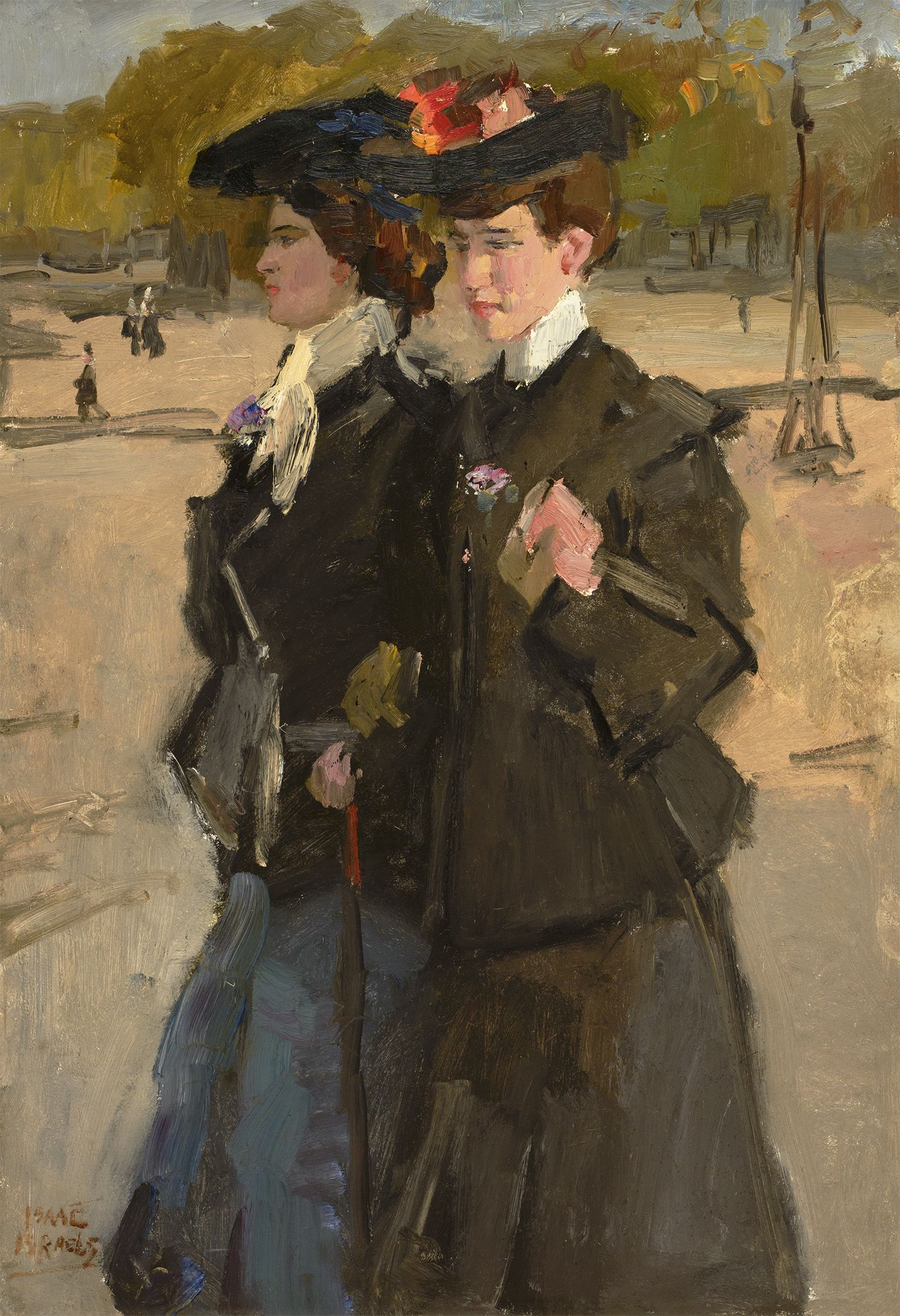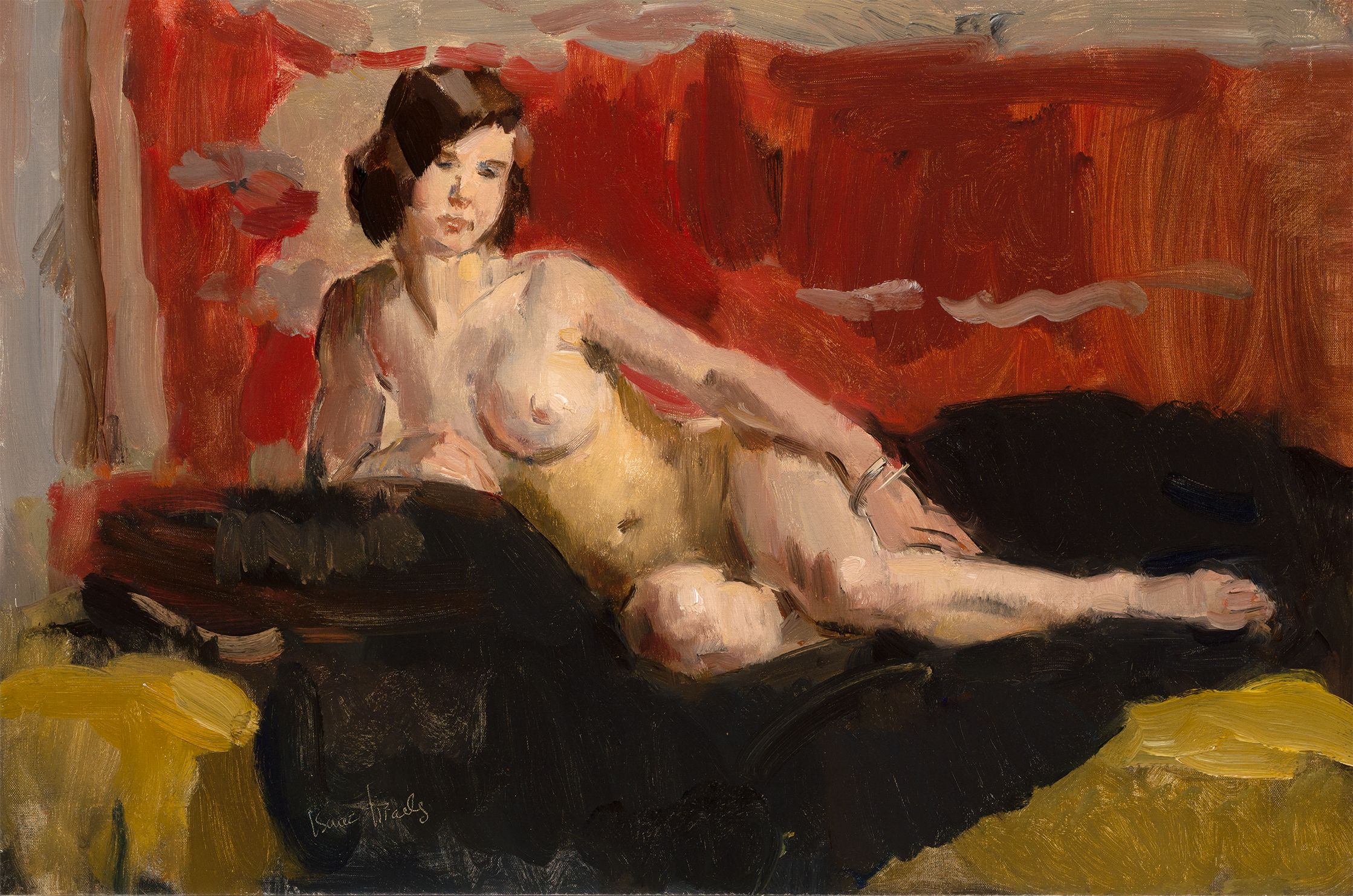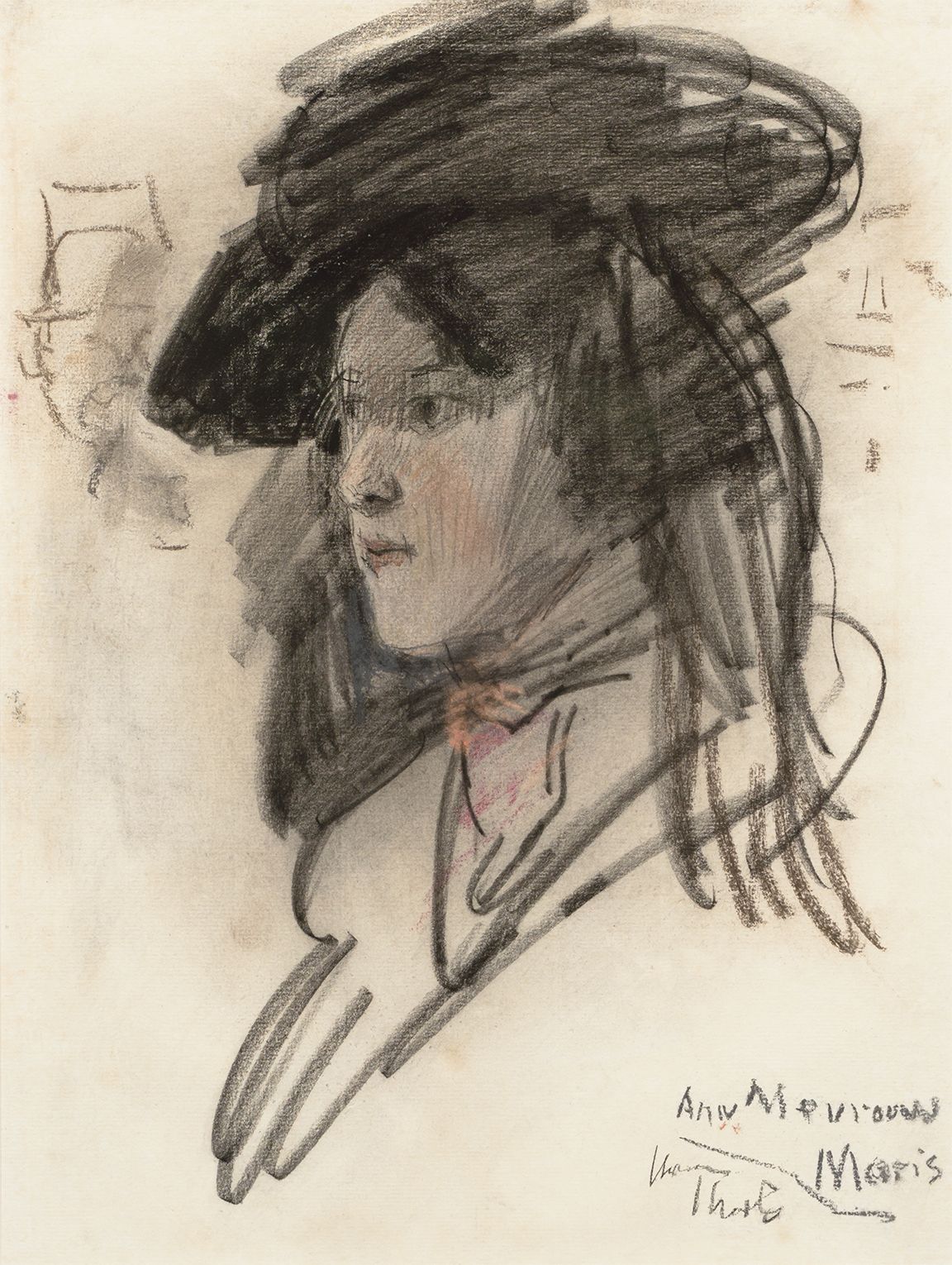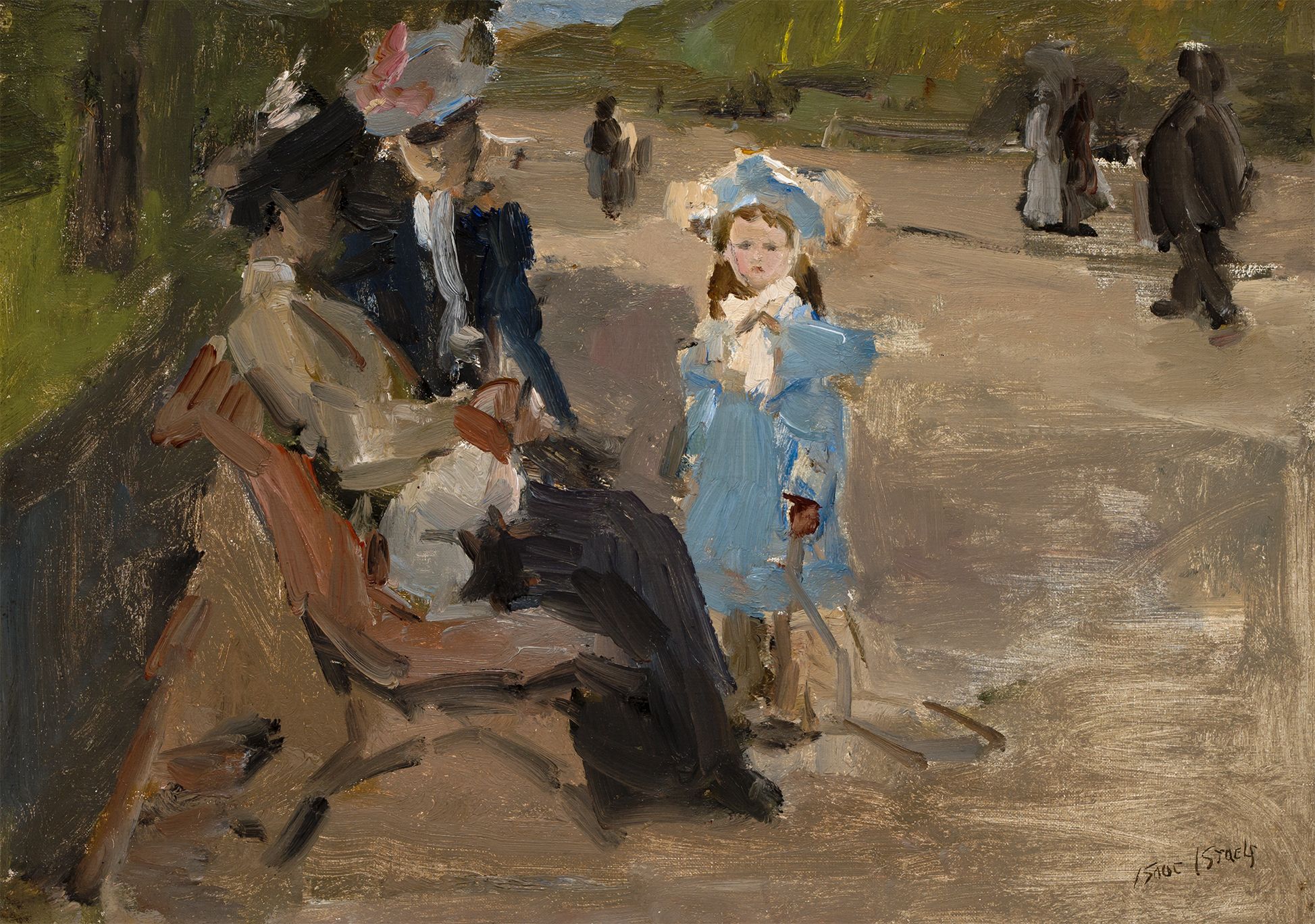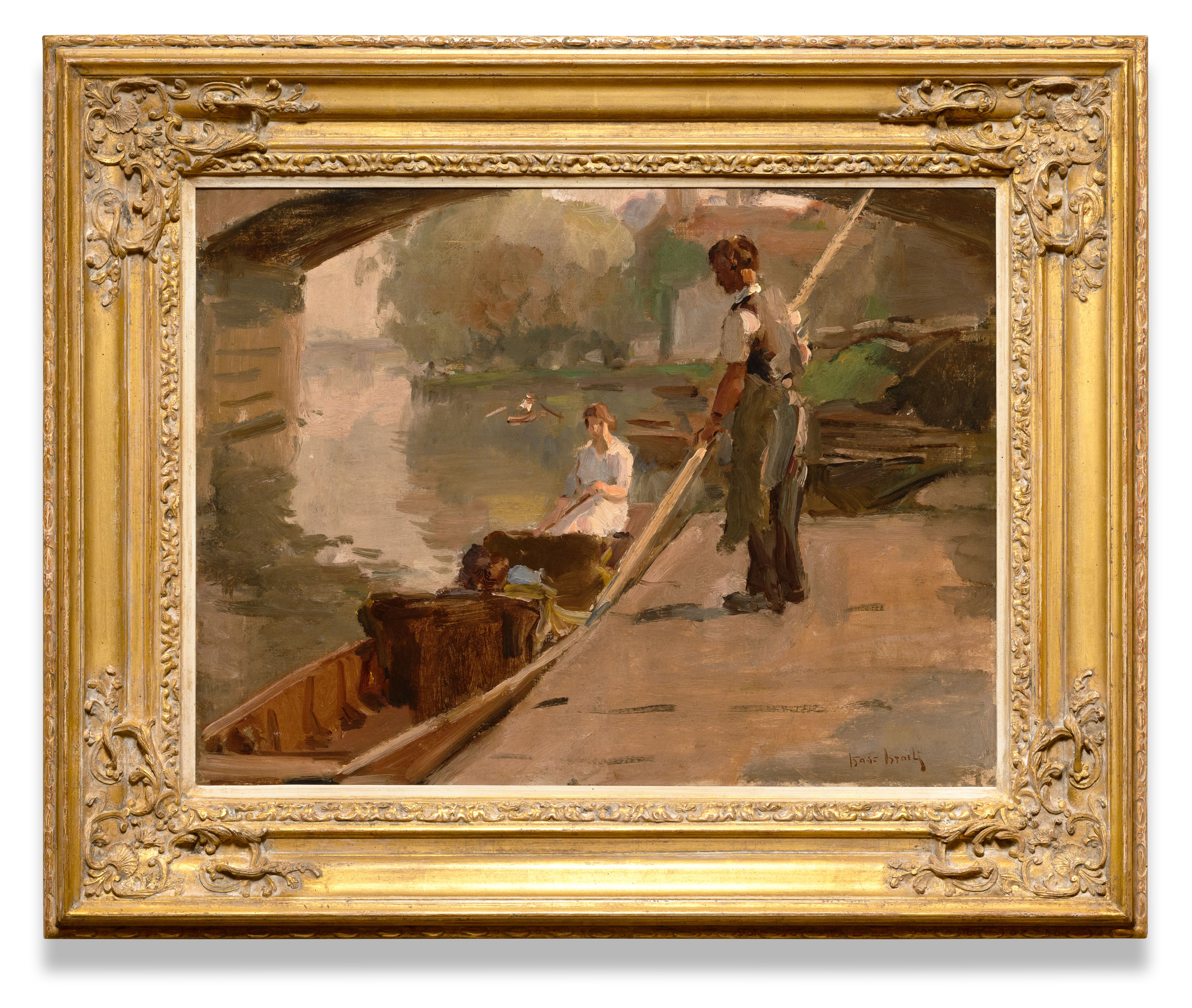
I.L. (ISAAC) ISRAELS 1865 Amsterdam - 1934 The Hague On the Bank of the River Thames, Richmond-London | On loan for exhibition 'Het Europa van Isaac Israels', 24 Apr. 2026 - 30 Aug. 2026, Kröller-Müller Museum
Oil / Canvas: 47 x 61 cm
- This artwork can be viewed in our gallery
- Call us for more information: +31 26 361 1876
- World wide shipping available
Details
‘When I looked out of my window the other day, I had, to my own surprise, an attack of patriotism. The Dutch landscape really is, to my mind, the most beautiful thing there is.’ So wrote Isaac Israels to the painter Willem Witsen, while travelling to London from Hamburg. This did not stop him from restlessly criss-crossing the continent. Israels had always loved to travel. Even as a child, he went to Paris with his parents every year. He made journeys to Italy, Spain, North Africa, Switzerland and Scandinavia to draw and to paint. During the 1920s, he even spent some time in the Dutch East Indies. From 1903 Israels had his own studio in Paris, where he found his favourite subjects among fashionable Parisians and could immerse himself in the modern art on view there. In the spring of 1913, he exchanged that city for London, where for a time he had a studio of his own. Here too, life in the great city was his subject. At Richmond on the river Thames, he painted two ladies setting out on a boat trip on a fine summer's day. A man in an apron, probably the proprietor who hired out the rowing boats, pushes them off. A narrow band of light on the water draws our eye into the distance up the river and stirs in the viewer a longing to go along. Richmond upon Thames, in the south-west of London, has for centuries been a favourite destination for the city's wealthier inhabitants. There are magnificent parks, and the Thames offers the opportunity for boat trips and rowing races. An ideal spot for Israels, who liked to seek out the sunny side of life. Here once more, he managed to capture a shimmering impression of people enjoying themselves on a sunny day on the water. When the First World War broke out, he was still in London. ‘I tried, as best I could, to close my eyes to all the dreadful things. I buried myself in my work more than ever, and would happily have worn blinkers.’ He did see how city life carried on, and he turned his attention to people shopping, to horsewomen in Hyde Park, to young dancers at a ballet school and to little boats on the Thames. When, after the outbreak of war, he was no longer permitted to paint in the streets of London, he hired boxers, a boxing ring and spectators, and set to work. For all his travels and all his impressions, Israels always remained himself. In Paris, he was a neighbour of Picasso, went out into the city with Kees van Dongen, admired the Symbolist Odilon Redon and for a time had one of Vincent van Gogh's Sunflowers hanging on his wall. Yet he did not allow all these modern impressions to divert him from the path he had so painstakingly developed. After his Amsterdam years, his palette grew somewhat lighter and his subjects more worldly, but until his death, he held fast to his virtuoso impressionist style. In 1923, he settled permanently on the Koninginnegracht in The Hague, in his father's old studio.
Width: 61 cm
Van Voorst Van Beest Gallery, The Hague 1980's
Sale Christie's Amsterdam, 10 nov. 1987, lot 319
Studio 2000, Blaricum 1990's
Private collection The Netherlands
R. Cohen Tervaert, J. van Loon, F. van Dijke, M. Wintle, "Het Europa van Isaac Israels", 2026, Waanders Zwolle, cat. 58, p. 93 (ill.)
Over I.L. (ISAAC) ISRAELS
Isaac Israels was the only son of the painter Jozef Israels. The family moved from Amsterdam to The Hague in 1871. Isaac also received his training at the academy at the same time as George Breitner, Floris Verster, and Marius Bauer, among others. He was a promising artist from an early age and won awards for his paintings. In the '80s, Isaac specialized in military subjects, an interest he shared with Breitner and Verster. Despite this promising start, he felt his education was not yet complete and went to Amsterdam, where he was accepted into the circle of the Tachtigers.
Turbulent city life became the common thread through his work. Between 1887 and 1894, things were quiet around him: few paintings are known from this period. Starting in the mid-1890s, Israels went back to The Hague in the summers, where he and his father would paint at the beach. They rented a villa in Scheveningen. His paintings of donkey-riding children were crowd pleasers and are still extremely popular. Israels joked that selling a painting was "the Highest of Arts." His donkey-riding children were eagerly purchased at high prices and can be considered highlights of his oeuvre for just that reason. Isaac Israels was not only the virtuoso painter of modern (city) life, but he was also a gifted portraitist. Especially in the last phase of his life, he commissioned portraits of important Dutchmen. Even in this genre, women remained his favorite subject. All his life, he preferred to draw and paint maids, Amsterdam street girls, telephone operators, mannequins in department stores, and nude models. His portraits of women are also highlights of his oeuvre, such as those of the spy Mata Hari, the first female doctor Aletta Jacobs, and the actress Fie Carelsen. Isaac Israels was accustomed to giving a quick characterization of his models. A crisp characterization had to appear on the canvas at once. As such, his best paintings are vivid, spontaneous, and struck just right. 'I had an attack of patriotism the other day when I looked out my window to my surprise. Surely the Hollandsche is to my mind the most beautiful thing there is,' Isaac Israels on his way to London from Hamburg to the painter Willem Witsen. That did not prevent him from traveling up and down the continent.
Israels always loved to travel. Even as a child, he went to Paris with his parents every year. He made trips to Italy, Spain, North Africa, Switzerland, Spain and Scandinavia to draw and paint. In the 1920s, he even spent some time in the Dutch East Indies. Starting in 1903, Israels had his own studio in Paris, where he found his favorite subjects among fashionable Parisians and was able to immerse himself in the modern art on display there. In the spring of 1913, he traded that city for London, where he had his own studio for a time. Despite all the travel and all the impressions, Israels always remained himself. He was a neighbor to Picasso in Paris, went into town with Kees van Dongen, admired the symbolist Odilon Redon, and for a time had one of Vincent van Gogh's Sunflowers on his wall. All these modern impressions, however, did not allow him to be diverted from his laboriously developed path. After his Amsterdam years, his palette became lighter and his subjects more mundane, but he stuck to his virtuoso impressionist style until his death. In 1923, he settled permanently on Koninginnegracht in The Hague, where he had left his father's studio vacant until long after his death.