C. (CAREL) WILLINK 1900 Amsterdam - 1983 Amsterdam Melpomene
Oil / Canvas: 40 x 53 cm
- This artwork can be viewed in our gallery
- Call us for more information: +31 26 361 1876
- World wide shipping available
Details
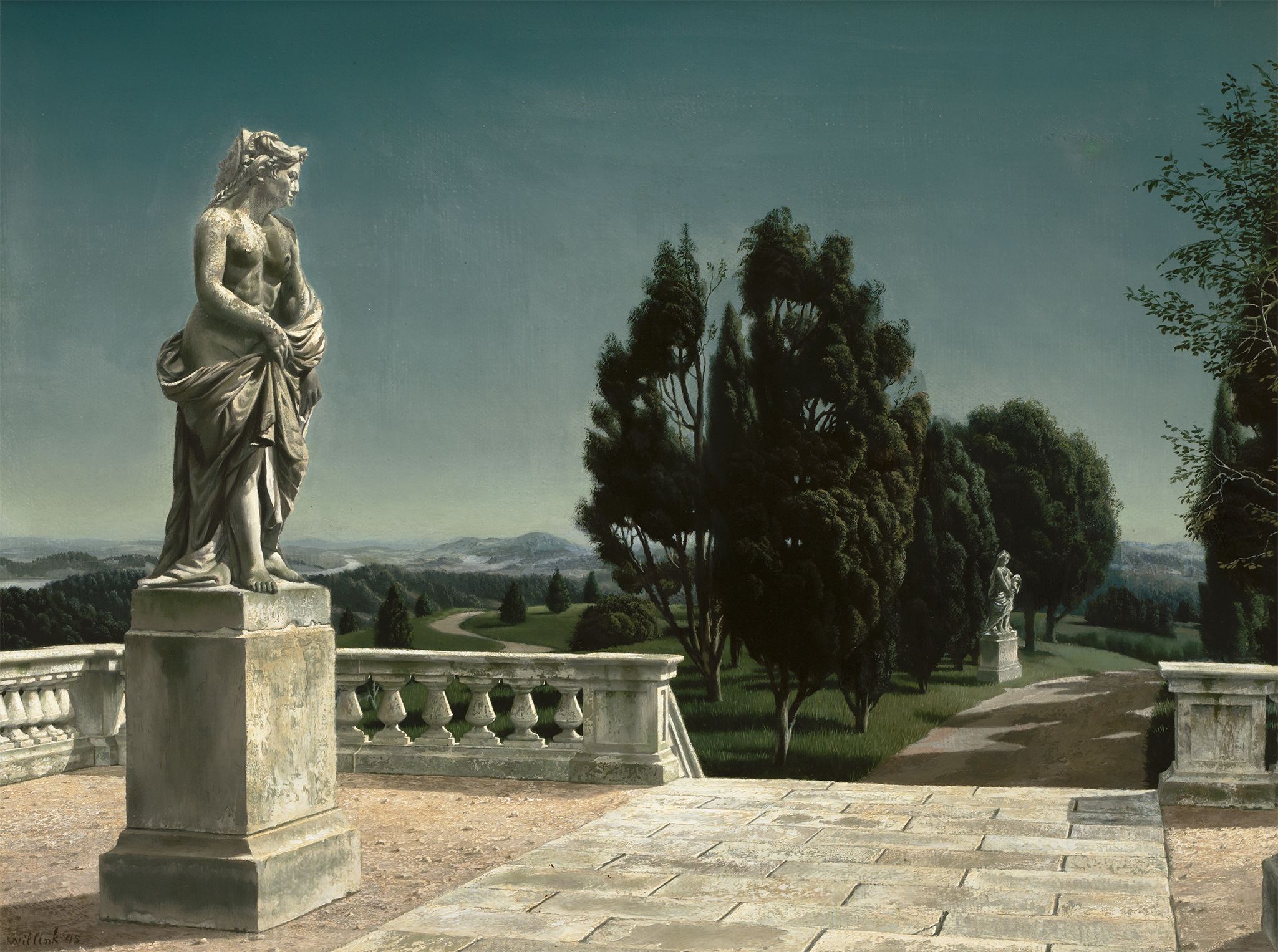
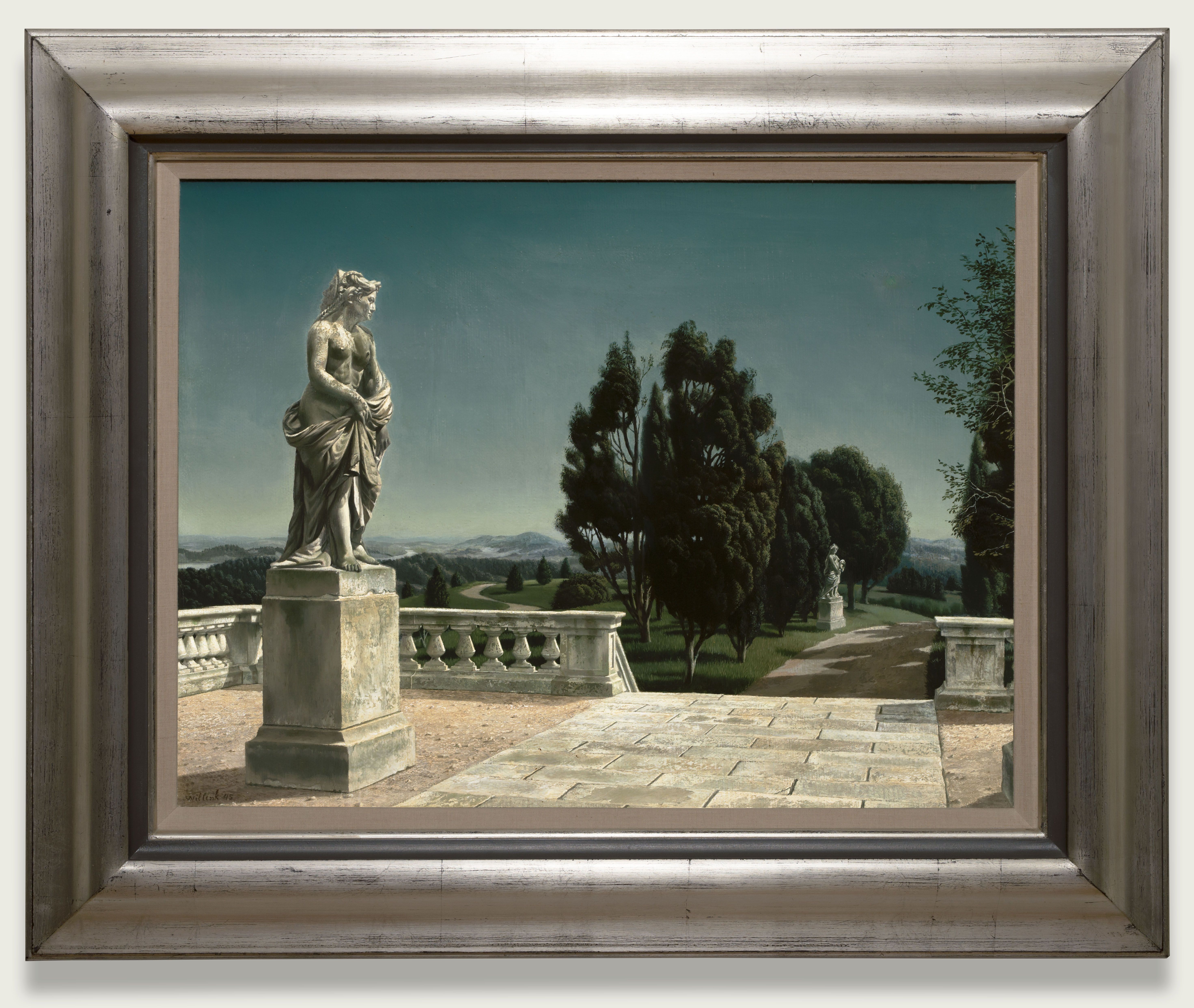
Carel Willink, a prominent Dutch artist of the 20th century, depicted a weathered, moss-covered statue in a park-like setting under the stark light of a low sun. The statue depicts Melpomene, the muse of tragedy. Nearby stands a second statue representing Fate, as the goddess Morta, cutting the thread of life. This symbolism of tragedy and fate is especially relevant for 1945, the somber final year of World War II when the piece was created. During the war, Willink faced challenging conditions and drew inspiration from statues at the Rijksmuseum, where he encountered these images. His focus on weathered imagery underscores decay, yet the river in the distance hints at a possible escape and a spark of hope.
Width: 53 cm
Collection Drs. Loek Brons, Amsterdam, 1990 (ca.)
Private collection The Netherlands
Eindhoven, Stedelijk van Abbemuseum, 'Carel Willink', 1949
Brussel, Palais des Beaux-Arts, 'Carel Willink', 1951
Tilburg, Paleis Raadhuis, 'Carel Willink', 1955
Amsterdam, Stedelijk Museum, 'Carel Willink', 1956
Nijmegen, Waaggebouw, 'Carel Willink', 1958
H.L.C. Jaffé, "Willink", 1979, Amsterdam, p. 100, no. 207 (ill.)
Over C. (CAREL) WILLINK
Carel Willink was the most important Dutch painter of magic realism. He also painted many portraits of wealthy Dutchmen. He was born in Amsterdam and made his first oil painting at age fourteen. He attended art school in Berlin. He was a pupil of Hans Baluschek at the International Free Academy. Until 1924 he painted mostly abstract, influenced by Constructivism. This was followed by his experiments with Cubism and Futurism. Because of his trip to Italy, he was influenced by Giorgio de Chirico, who produced metaphysical paintings. This art gives a sense of alienation and that is how Willink arrived at his magical realism. Often landscapes and classicist architecture are the background gravel of they figures or animals. The canvases look pessimistic and give a sense of emptiness and decay. He made extensive use of photography to get as close to reality as possible. In addition, lighting played a major role in his work. Carel was 83 years old when he died in Amsterdam.