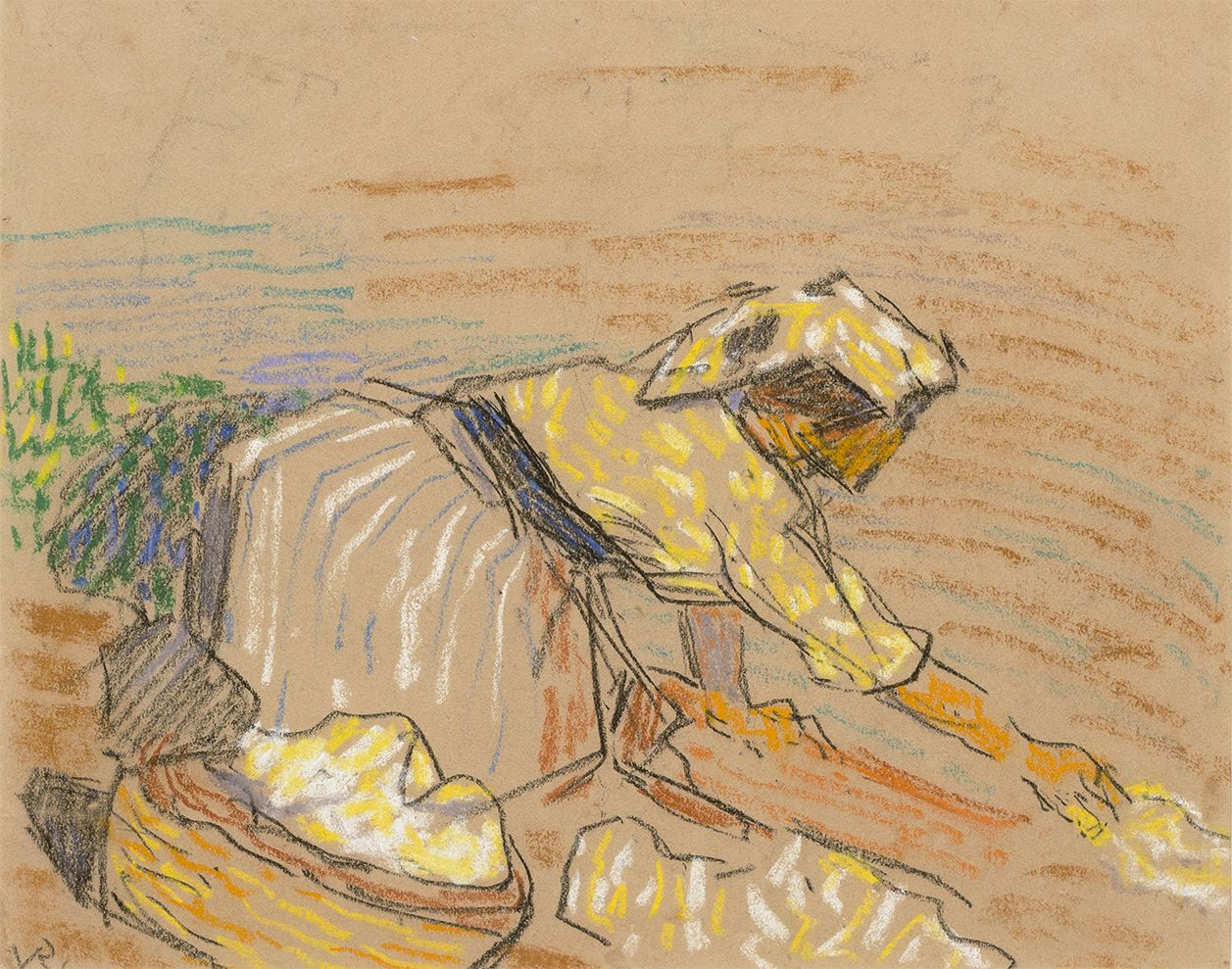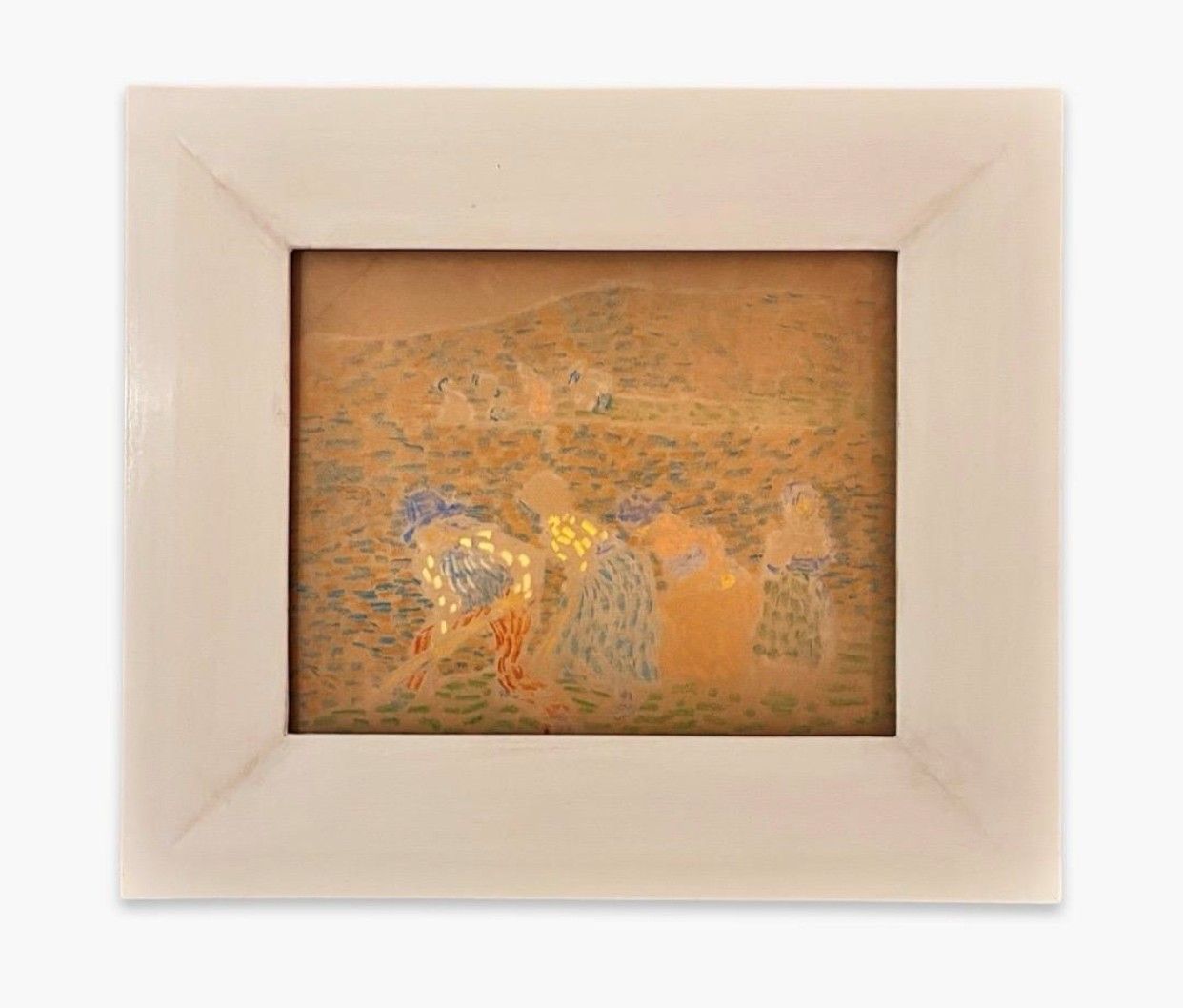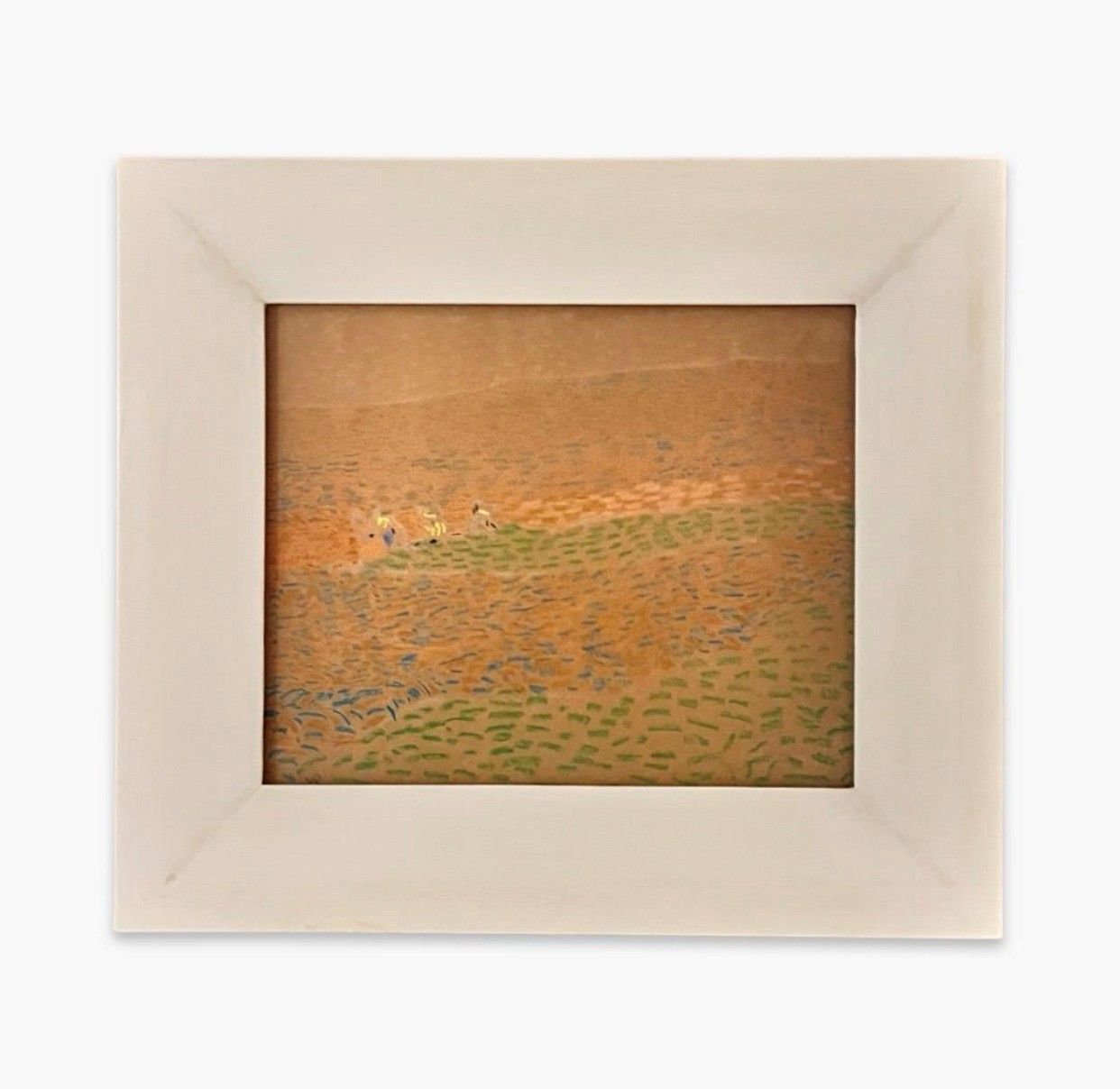
O. (OTTO) VAN REES 1884 Freiburg (Dld.) - 1957 Utrecht Paysage I
Pastel / Paper: 28 x 33 cm
- This artwork can be viewed in our gallery
- Call us for more information: +31 26 361 1876
- World wide shipping available
Details
When Otto van Rees, together with his wife Adya van Rees, lived and worked next to Picasso's studio in the famous Bateau Lavoir in Paris from 1904 onwards, he would escape the heat and stay from the summer months through to autumn, together with Kees van Dongen and his family, in a rented farmhouse in Fleury-en-Bière. This village south of Paris near Barbizon inspired Van Rees and Van Dongen to paint, draw and work in pastel outdoors, as Van Gogh had done. Van Rees was already highly accomplished in this latter technique and, by all accounts, he taught it to Van Dongen. During this period they created beautiful, colourful luministic paintings together and captured the shimmering heat on canvas. For both Van Dongen and Van Rees, this period represented a breakthrough and paved the way for the many exhibitions that followed (internationally).
These pastels were made as part of a series. During his early period, Van Rees was fascinated by rural/peasant life and created many works on this theme in both France and Italy. The Centraal Museum in Utrecht and the Rijksmuseum Amsterdam also hold work from this period in their collections.
When Otto van Rees stayed in Zurich in 1914 and 1915, he became friends with a teacher, art dealer and art collector, Han Coray. Coray commissioned him, amongst other things, to create murals together with Hans Arp in his school. After Van Rees returned to Paris following the First World War, Coray purchased all of Van Rees's work, including these pastels, which remained in the family for a long time.
Width: 33 cm
Collection R. van Eijck, The Hague, Den Haag
Centraal Museum Utrecht, 'Otto en Adya van Rees, leven en werk tot 1934', Utrecht, 30 April - 22 June 1975
Haags Gemeentemuseum, 'Otto en Adya van Rees, leven en werk tot 1934', The Hague, 12 July - 24 August 1975
Lalique Museum, 'Van Toorop tot Van Dongen', Doesburg, 7 July 2024 - 22 June 2025
Museo Comunale d’Arte Moderna, 'Otto van Rees, 40 opere dalle collezione Ticino', Ascona, 1994, p. 8, no. 9 (ill.)
B. Mordehai Janssens, 'Van Toorop tot Van Dongen. Van symbolisme tot fauvisme', Doesburg, 2024/2025, p. 45 (ill.)
Over O. (OTTO) VAN REES
O. (Otto) van Rees was a Dutch painter, draughtsman, printmaker, and illustrator who held a distinctive place within the European avant-garde of the early twentieth century. Raised in an intellectual, socialist milieu in the Gooi region of the Netherlands, Van Rees studied under Herman Heijenbrock and Jan Toorop before, on Toorop's advice, departing for Paris in 1904. Through the artistic circles around Le Lapin Agile in Montmartre, he formed close ties with Picasso, Braque, and Kees van Dongen, and secured a studio in the Bateau Lavoir. His work evolved in dialogue with the successive modernist currents of the period, moving from neo-impressionism and Fauvism into Cubism. During the First World War, he relocated to Switzerland, where in November 1915 he and his wife, textile artist Adya Dutilh, exhibited alongside Hans Arp at the Galerie Tanner in Zurich. This exhibition is widely regarded as the founding moment of the Dada movement. In the early 1930s, he participated in the Parisian group Cercle et Carré. Following a devastating train crash in France in 1919, in which their eldest daughter was killed, Van Rees gradually returned to the Netherlands. In his later years, he worked primarily in Utrecht, focusing on portraiture, still life and religious subjects. He died on 19 May 1957 from injuries sustained in a road accident.