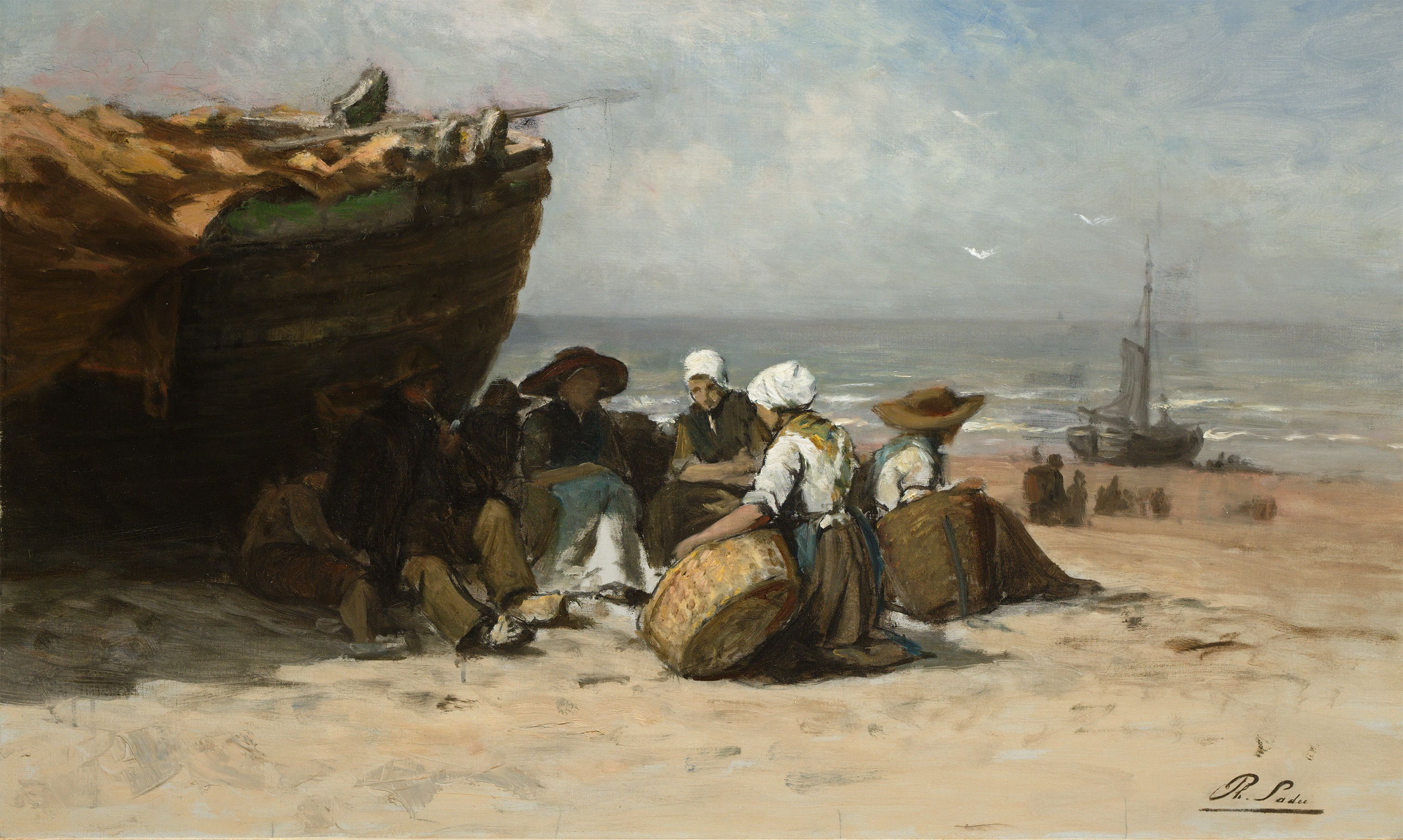
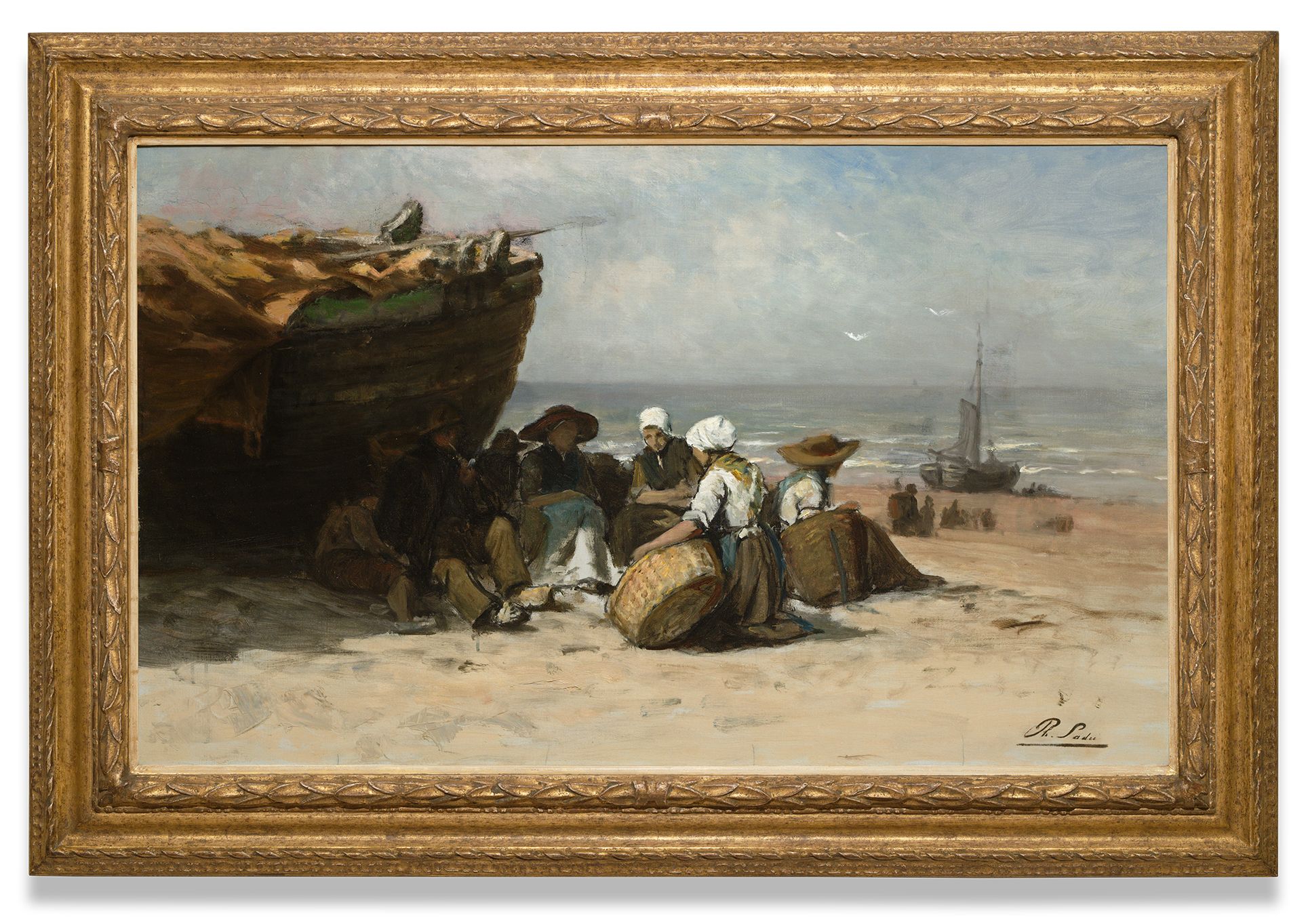
P.L.J.F. (PHILIP) SADÉE 1837 Den Haag - 1904 Den Haag Fishermen's Wives on the Beach
Oil / Canvas: 60 x 101 cm
- This artwork can be viewed in our gallery
- Call us for more information: +31 26 361 1876
- World wide shipping available
Details
Sadée, a maverick within The Hague School due to his versatile choice of subject matter and use of color, followed in the footsteps of Jozef Israels (1824-1911) in opting for the fishing genre, of which this painting is a good example. The sunlit beach shows Scheveningen women with their typical straw hats, returning from the fish auction that always took place on the beach at the time. Among them a shrimp fisherman with his net busy talking to the women. In the bom barge, the fisherman deposits his last catch in the basket of the waiting woman. For the poor woman on the left of the ship is offered the opportunity to outwit a few fish for free. In his paintings, Sadée always shows compassion for the less fortunate and has an eye for the often harsh conditions that fishermen had to face.
Width: 101 cm
Over P.L.J.F. (PHILIP) SADÉE
Philip Lodewijk Jacob Frederik Sadée was a painter of the Hague School. Trained at the Hague Drawing Academy and in the studio of J.E.J. van den Berg, he began as a history painter. Following studies in Düsseldorf (1865-1866) alongside Julius van de Sande Bakhuyzen, he turned to genre painting. Scheveningen provided his defining subject: the life of the fishing community on the beach and in the dunes, with particular attention to fisherwomen and children. His bright palette and refined technique set him apart within the predominantly 'grey' Hague School. Sadée exhibited internationally with considerable success, notably in England, and served as principal instructor at the Hague Drawing Academy.