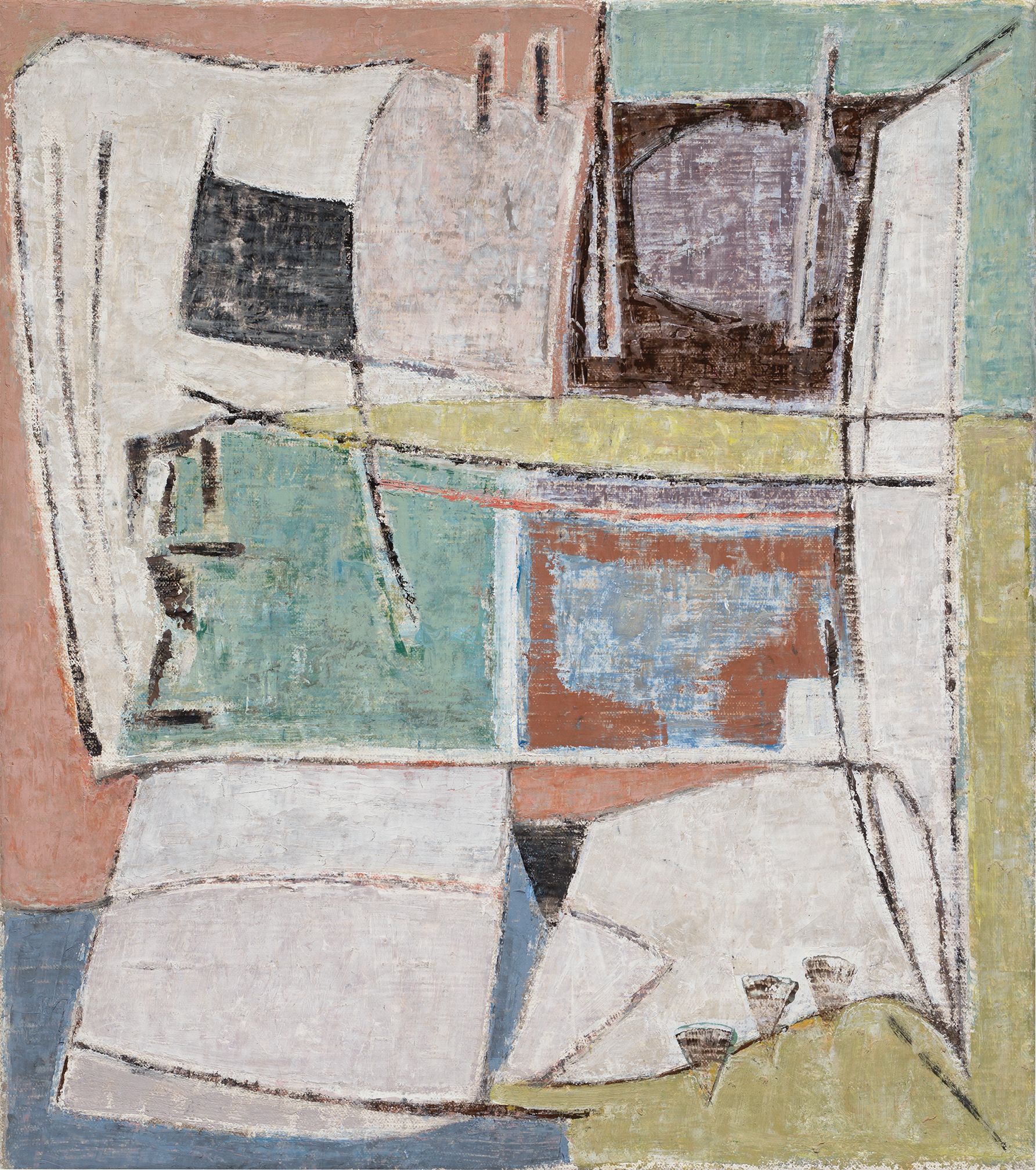
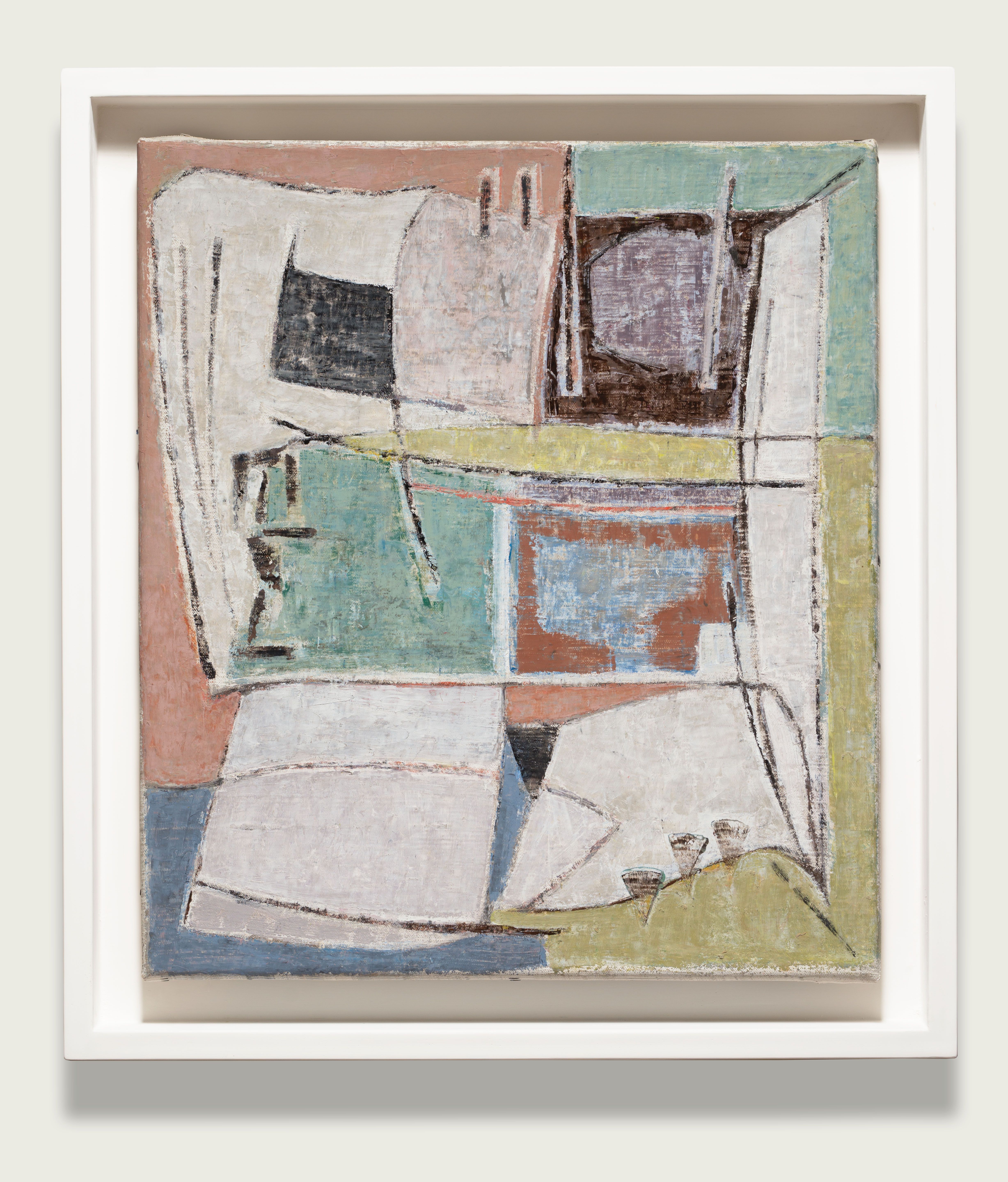
G. (GEER) VAN VELDE 1898 Lisse (The Netherlands) - 1977 Cachan, Val-de-Marne (France) Composition
Oil / Canvas: 44 x 39 cm
- This artwork can be viewed in our gallery
- Call us for more information: +31 26 361 1876
- World wide shipping available
Details
Geer van Velde's painting practice was rooted in his observations of the world around him. He analysed the forms and the space occupied by objects, simplifying them into lines that outline planes where colours are arranged. His work gradually evolved from paintings with recognisable representations to fully abstract compositions. However, this abstraction always remained connected to visible reality. Things became colour planes, but the space between objects was equally significant. He rendered light and space as independent elements, which he balanced carefully. As a result, abstract still lifes emerged within an abstracted reality.
Width: 39 cm
Collection Cornelia Weijsenfeld, de Wittenberg, Garderen
Private collection The Netherlands
Over G. (GEER) VAN VELDE
Geer van Velde was a Dutch painter and one of the leading artists of the post-war École de Paris. The younger brother of Bram van Velde, he trained as a decorative painter at the Kramers firm in The Hague. After military service with the Red Cross, he settled in Paris in 1925, devoting himself entirely to painting. Initially working in a figurative-expressionist manner close to Fauvism, Van Velde's style evolved towards abstraction after a period in the South of France (from 1938), characterised by reducing reality to vertical, horizontal, and diagonal lines, combined with subtle colour planes and filtered light. In 1937, he met the writer Samuel Beckett, who was instrumental in promoting his work and wrote several essays on the Van Velde brothers' paintings. Van Velde exhibited at Galerie Maeght in Paris and the Kootz Gallery in New York and was awarded the first prize for a foreign artist at the 1951 Biennale de Menton. From 1944, he lived and worked in Cachan, near Paris, where he remained until his death.