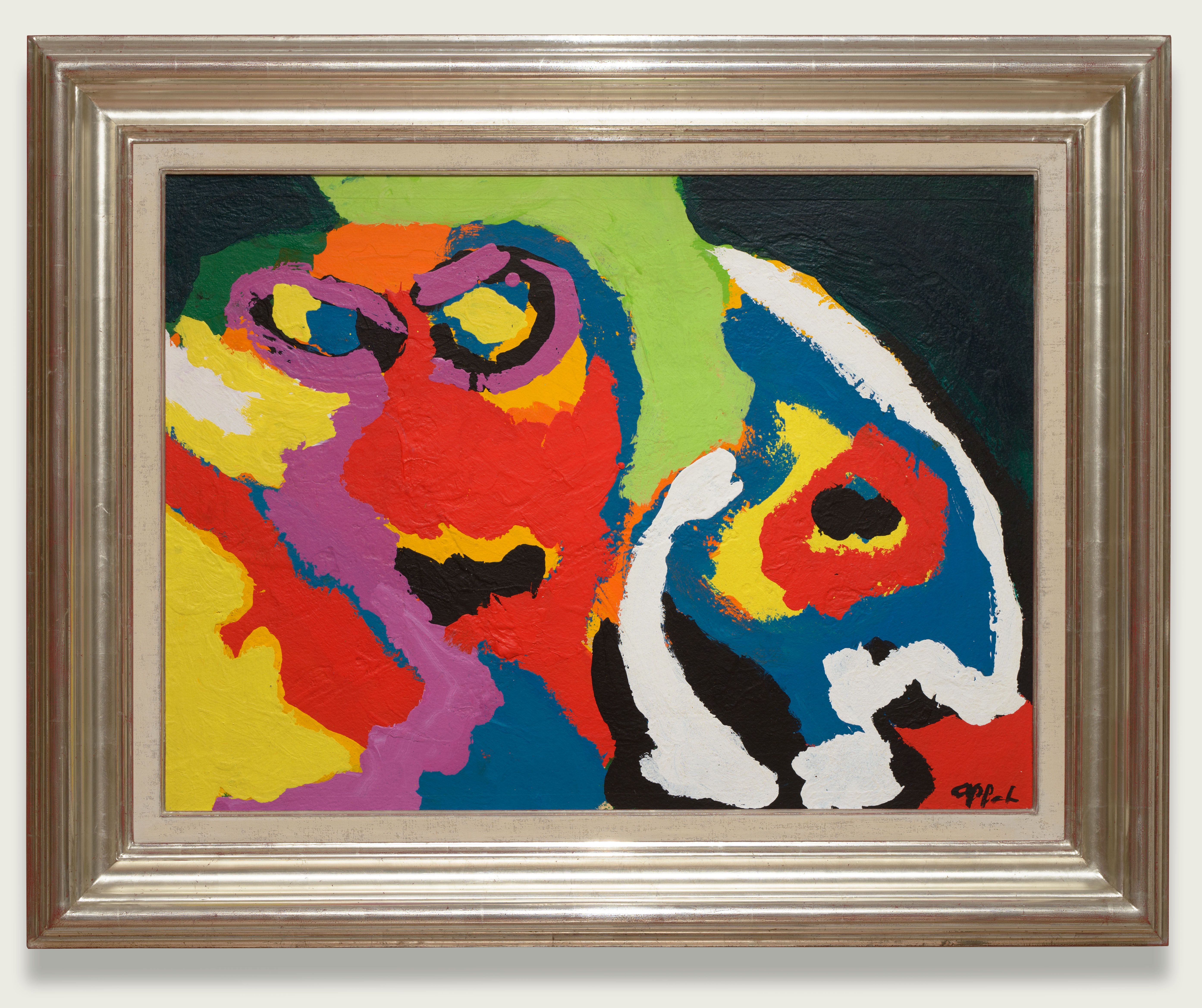
K. (KAREL) APPEL 1921 Amsterdam (The Netherlands) - 2006 Zürich (Switzerland) Red Personage
Acryl/paper/canvas: 57 x 76 cm
- This artwork can be viewed in our gallery
- Call us for more information: +31 26 361 1876
- World wide shipping available
Details
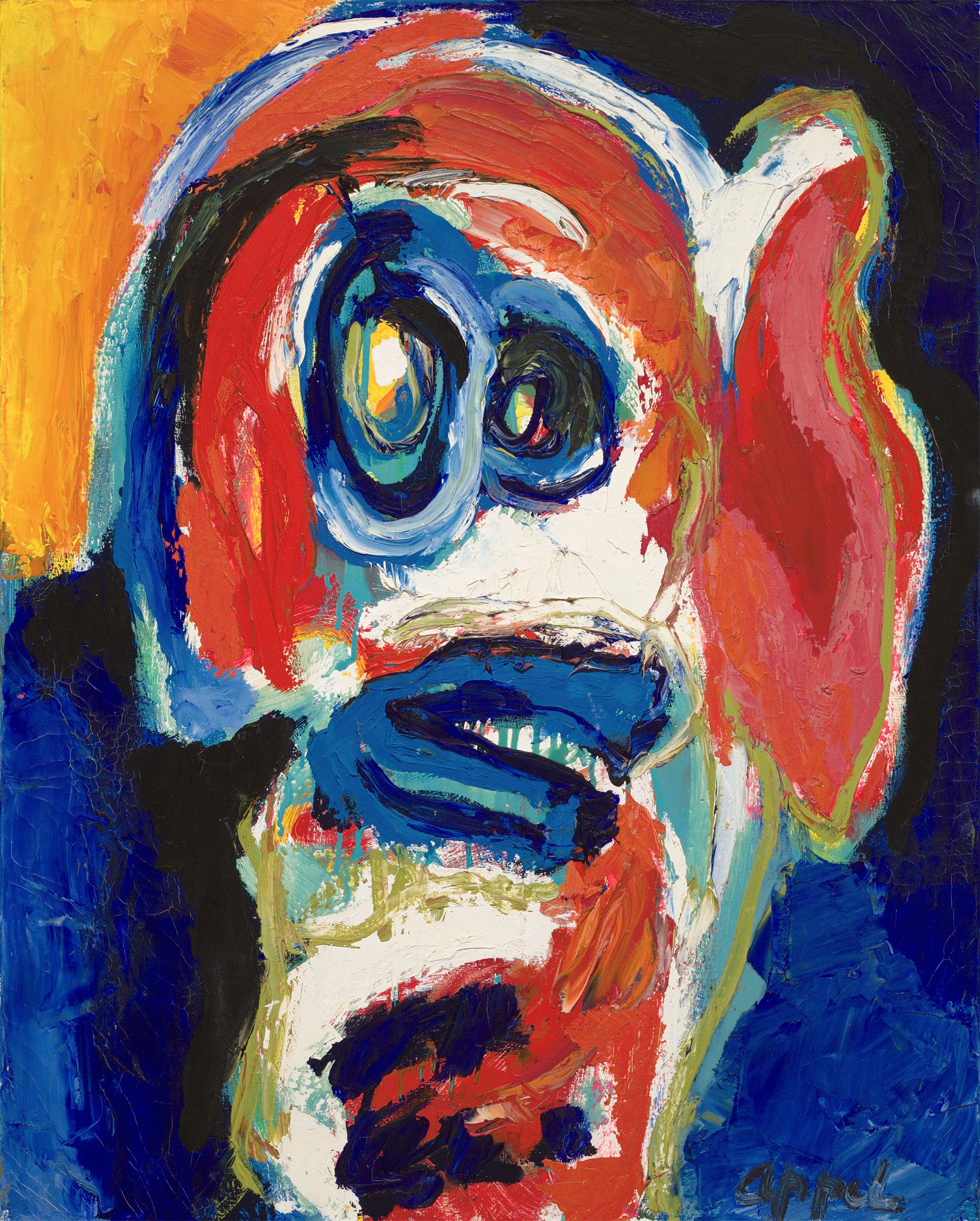
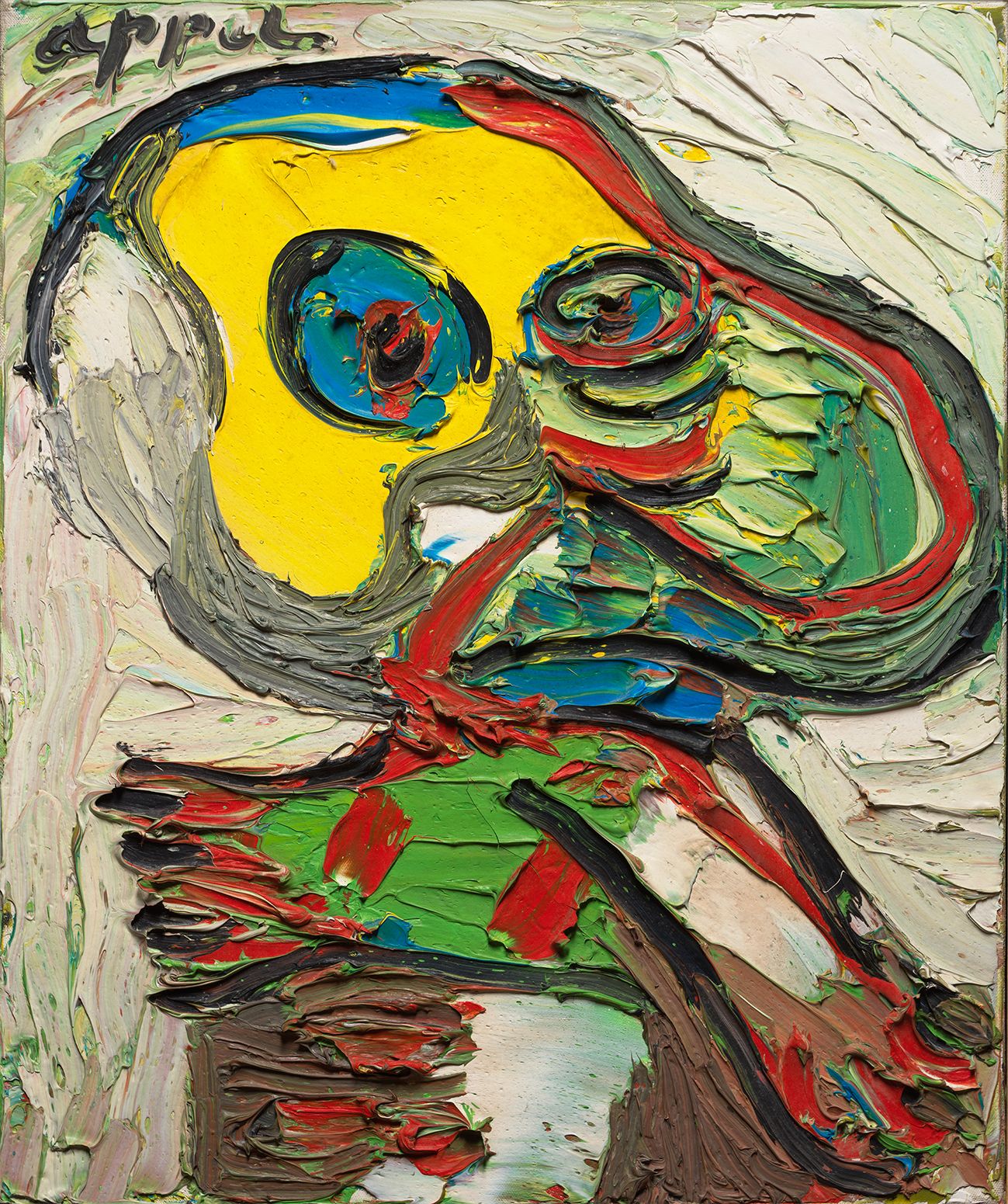
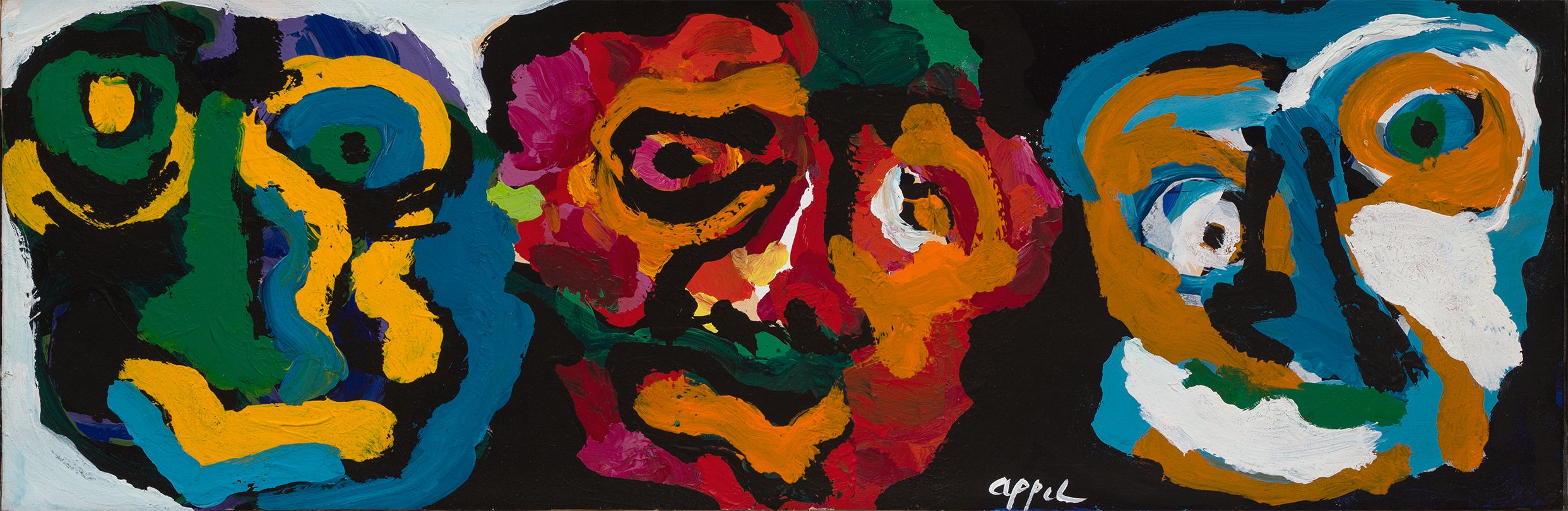
Bright colours, clear contours, and an almost sculptural use of paint. An image swiftly emerges from the layers, and we recognise two eyes and a mouth. It is a primal image, a terrifying mask that commands a powerful presence in any space. This painting can only be the work of the Netherlands' greatest post-war artist: Karel Appel. Appel's work has always been exuberant, colourful, spontaneous, vital, and powerful, from the very beginning of his painting career, even as he continued to innovate throughout his life. For Appel, the essence lay in the act of painting: the painting was a reflection of a release of creative tension.
Width: 76 cm
Over K. (KAREL) APPEL
Dutch painter, sculptor, and poet Karel Appel was born in Amsterdam. His father was a barber and Karel was to follow in these footsteps. He chose art school instead (Rijksacademie voor Beeldende Kunsten). After the Second World War he travelled to Liege and Paris. In November 1948, COBRA was born: an international movement of artists who worked experimentally that evolved from the criticisms of Western society and a common desire to break away from existing art movements. Experimentation was the symbol of an unfettered freedom. Appel was one of its founding members. He drew inspiration from primitive art, children’s drawings, and outsider art, which he called unspoiled and pure. Appel painted spontaneously and created his compositions as he worked. He used to say: 'I just mess around'. Appel painted and made collages and sculptures using simple forms and vivid colours. In 1953, he made his name internationally at the São Paolo Biënnale. This led to exhibitions around the world. By 1990, he had studios in New York, Connecticut, Monaco, and Tuscany. His work is to be found in all major modern museum collections in the world.