A.C.P. (CHARLEY) TOOROP 1891 Katwijk - 1955 Bergen Papavers
Oil / Canvas: 65 x 52 cm
- This artwork can be viewed in our gallery
- Call us for more information: +31 26 361 1876
- World wide shipping available
Details
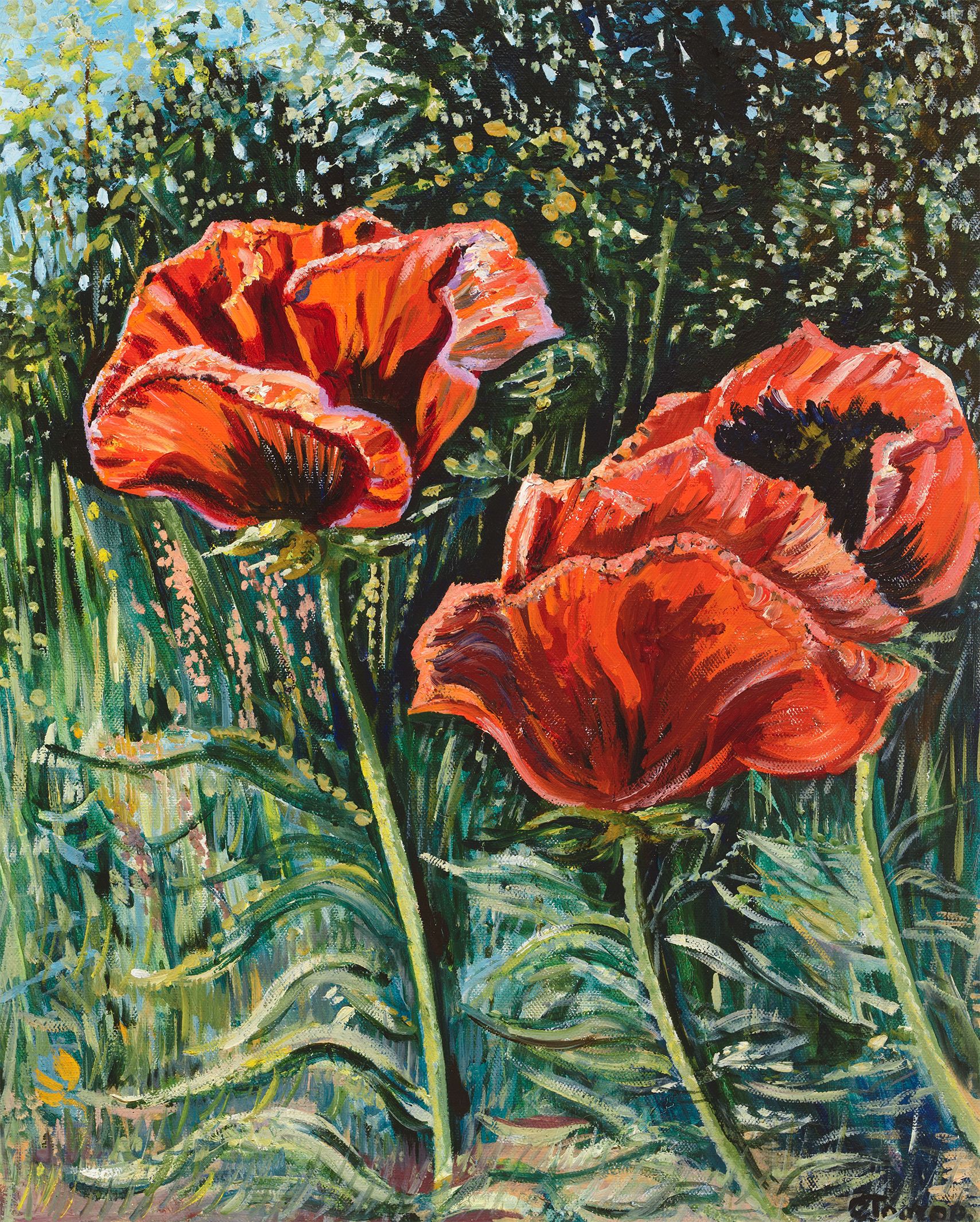
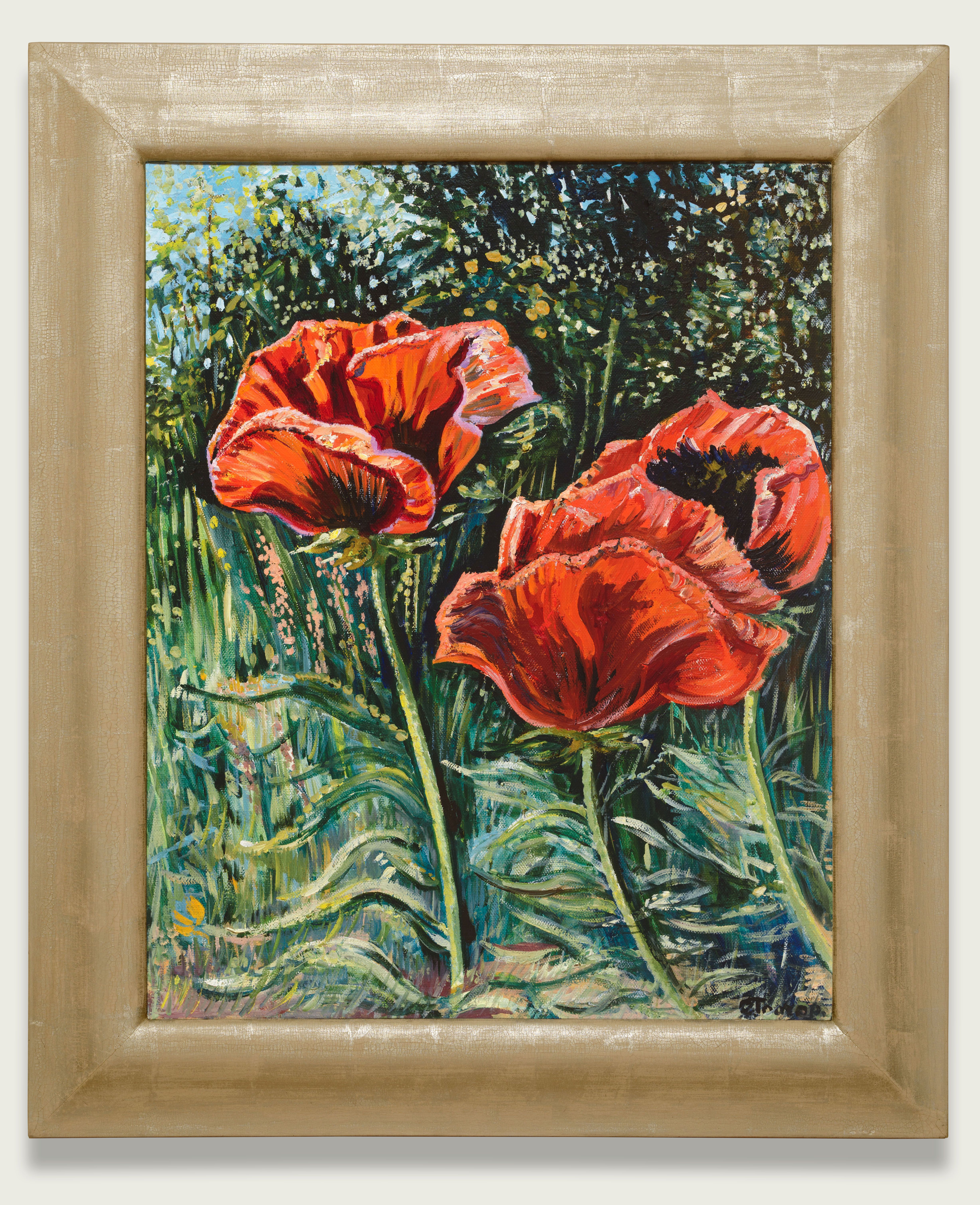
Charley Toorop's painting Poppies depicts three vivid red flowers that stand out sharply against a cooler background. The bold colours and monumental composition make the flowers almost tangible and convey the intensity of a portrait. As the daughter of the renowned painter Jan Toorop, Charley developed her own distinctive style: expressive realism with sharp forms and striking colours, establishing her as a leading figure in Dutch figurative art. Poppies embodies her pursuit of 'inspired imagination': revealing a deeper emotional layer within visible reality. While realism remains its foundation, the expressive power and monumental composition lift the subject above the everyday.
Width: 52 cm
By inheritance to his son Jan Hemelrijk (1918-2000), Ilpendam
By inheritance to the last owner, 2000- 2025
Nico J. Brederoo, "Charley Toorop", 1982, Amsterdam, p. 310, als Papavers tegen bossage
Over A.C.P. (CHARLEY) TOOROP
Charley Toorop was born on 24 March 1891 in Katwijk aan Zee, the daughter of the artist Jan Toorop and the Englishwoman Annie Hall. Before committing to the visual arts around 1910, she studied the violin and voice. In 1912, she married the philosopher Henk Fernhout, with whom she had three children, including the painter Edgar Fernhout and the filmmaker John Fernhout. The marriage was formally dissolved in 1924. Toorop's early work was shaped by Expressionism and the Der Blaue Reiter movement. Since 1916, she has been a member of the artists' group Het Signaal and is associated with the Bergen School, characterised by emphatic lines and bold colour contrasts. In 1926, she moved to Amsterdam, where her painting was influenced by cinema: frontal, isolated figures, as though lit by lamps on a film set. Her still lifes show an affinity with Synthetic Cubism. From the 1930s onwards, she developed a powerful, expressively realist style, depicting portraits, self-portraits, nudes, and socially engaged subjects. Toorop was a central figure in the Dutch art world. Her house, De Vlerken in Bergen, commissioned by her father in 1921, became a gathering place for artists, musicians, and writers. She co-founded initiatives such as the ASB and the Filmliga, and maintained friendships with Piet Mondriaan and Bart van der Leck. Her most significant work, Three Generations (1941–1950, Museum Boijmans Van Beuningen), depicts herself, her father, and her son, Edgar. Charley Toorop died on 5 November 1955 in Bergen. Her work is held in the foremost Dutch public collections, with the Kröller-Müller Museum alone holding over forty of her paintings.